Continuum: Vietnam Exhibitions:
1-30 November 2025: Solo show as part of the international biennale Photo Hanoi '25, Vietnam (sponsored by UNFPA & the British Council)
5 December 2025 - 11 January 2026: Solo show UNIS Hanoi, Vietnam
18 December 2025: Exhibiting photographer, Common Ground exhibition, The Print Space, London, UK (Print sale proceeds donated to Medicines San Frontiers (MSF))
2 February 2026 - 28 February 2026: Premier Village Phu Quoc (Accor), Vietnam
March 2026: TBC Luxury hotel & residences Ho Chi Minh City, Vietnam
Print Sales
All prints below are for sale as collector's editions of just eight copies.
Each print will be:
- Signed and inscribed by Andy Soloman;
- Signed and inscribed by Andy Soloman;
- Numbered 1/8; 2/8; 3/8 etc depending how may have been sold before your purchase;
- Come with a signed certificate of authenticity complete with hologram security mark;
- Full caption details with the backstory;
Click here to buy Continuum Collector's Edition Prints
Click here to buy Archive Collector's Edition Prints
Open to agent representation, book publishing, exhibitions and artist talks, speaking opportunities and commissions
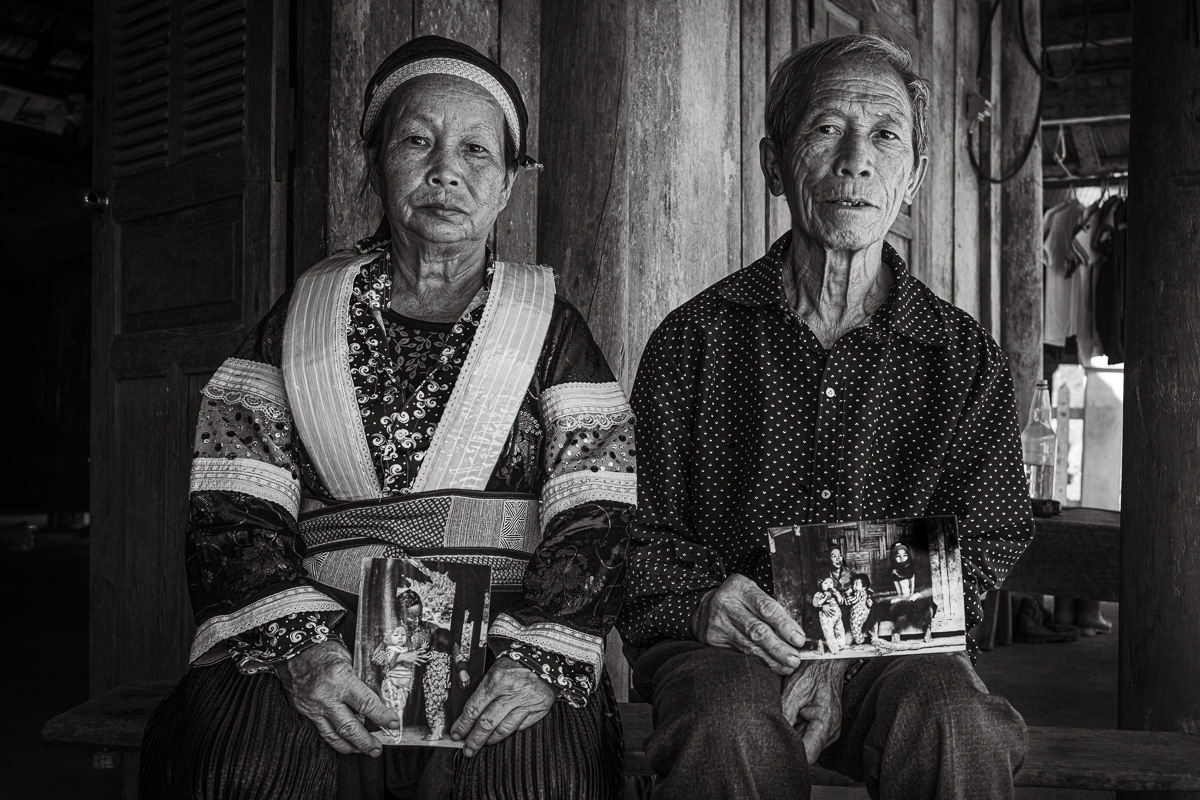
I first met Mrs Vy in 1992, sitting outside her wooden house with two of her nine children clinging to her legs. As I took photos, one child started to cry, which set their two dogs circling and growling at me. Mrs Vy got up, hands on her hips, and scolded the dogs with a sharp tut, which sent them retreating. She calmly sat back down and began breastfeeding one of her children.
When I returned in 2024, her husband Duong Van Sinh was lounging in a hammock, dividing his attention between the radio and a conversation on his mobile phone. He greeted me with a wave but stayed on his call. Mrs Vy disappeared briefly, returning dressed in her best traditional costume, a special outfit she said she hadn’t worn in years, and together, the two of them posed for photos on the same porch where we’d met more than three decades earlier.
When I returned in 2024, her husband Duong Van Sinh was lounging in a hammock, dividing his attention between the radio and a conversation on his mobile phone. He greeted me with a wave but stayed on his call. Mrs Vy disappeared briefly, returning dressed in her best traditional costume, a special outfit she said she hadn’t worn in years, and together, the two of them posed for photos on the same porch where we’d met more than three decades earlier.
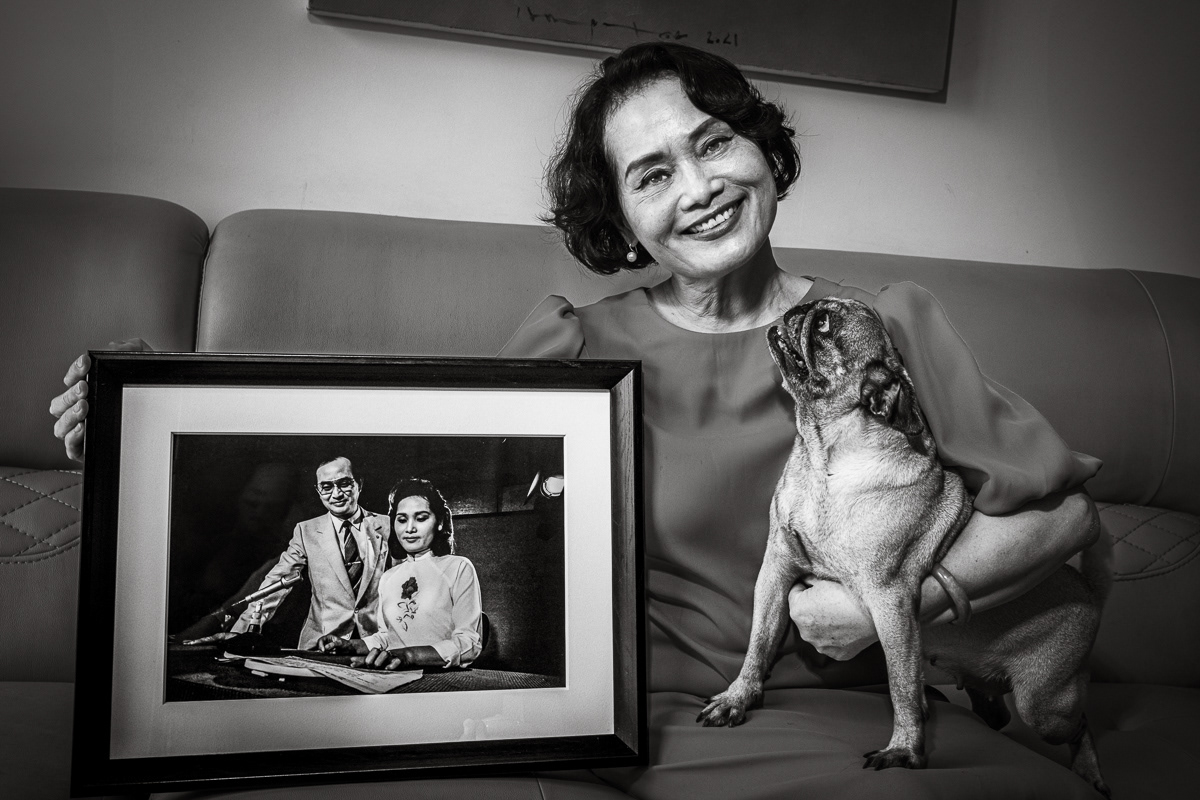
Back in 1992, Vietnam Television operated from run-down studios on Giang Vo, with limited funding and outdated equipment. Staff would monitor foreign news channels and record single-voice voiceovers for imported programmes. In one studio, presenters Ngoc Tram and Thanh Hung were preparing to record; both seemed shy in front of my camera, while their colleagues found my presence amusing and burst out laughing as I took photos.
When I met Ngoc Tram again in 2024, the transformation was striking. She is now retired, and VTV has become a well-funded, state-of-the-art broadcaster, complete with a new and impressive headquarters.
When I met Ngoc Tram again in 2024, the transformation was striking. She is now retired, and VTV has become a well-funded, state-of-the-art broadcaster, complete with a new and impressive headquarters.
Continuum Collector's Edition Print:
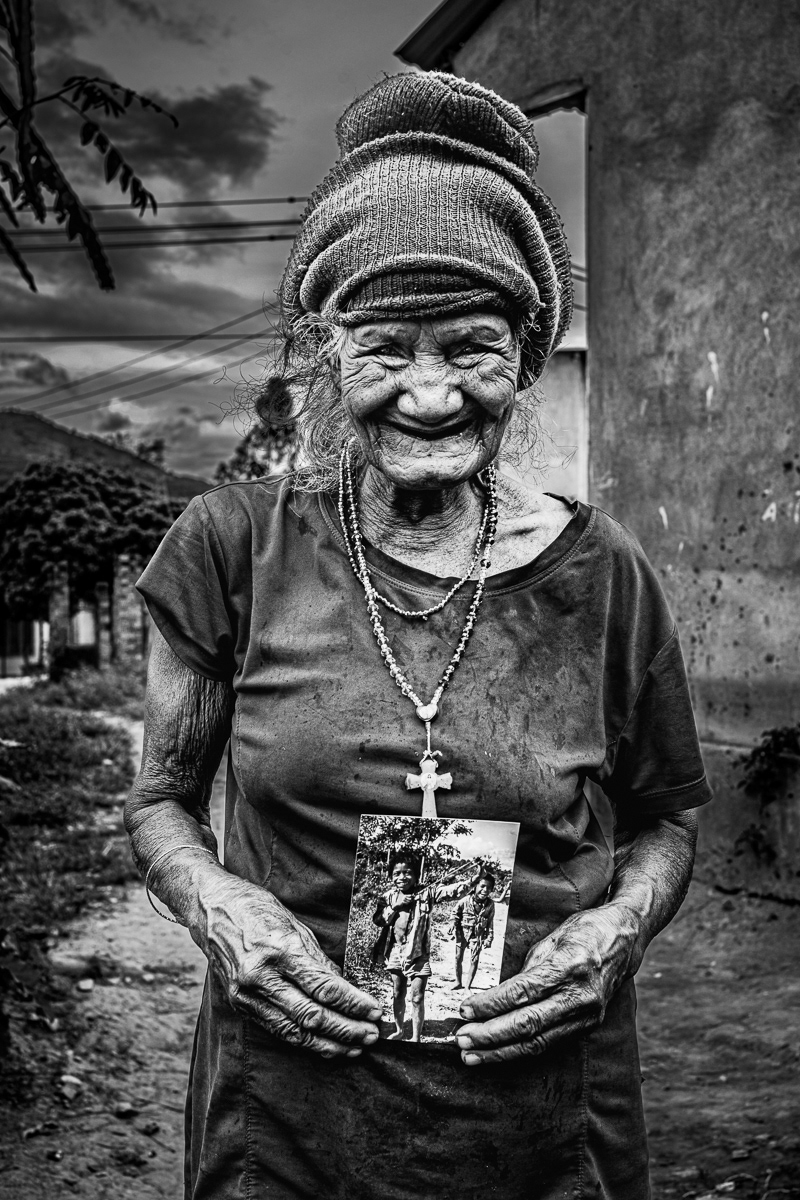
At 83, Y Tring needed her daughter’s support to help her down the steep path to come and meet me. Though age has stooped her and the years have left her feet gnarled and tough, her spirit shone through: beneath a blue woollen hat and a faded blue t-shirt, tangled with beads, rosary and crucifix around her neck, her deeply lined face lit up in a wide smile as she received a photo from 1992 of her sons Bluc and Ung as young boys. Tring gripped my hands, radiating warmth and gratitude.
“Thank you,” she said quietly. “I don’t have any photographs from when they were young, this means so much.”
“Thank you,” she said quietly. “I don’t have any photographs from when they were young, this means so much.”
Continuum Collector's Edition Print:
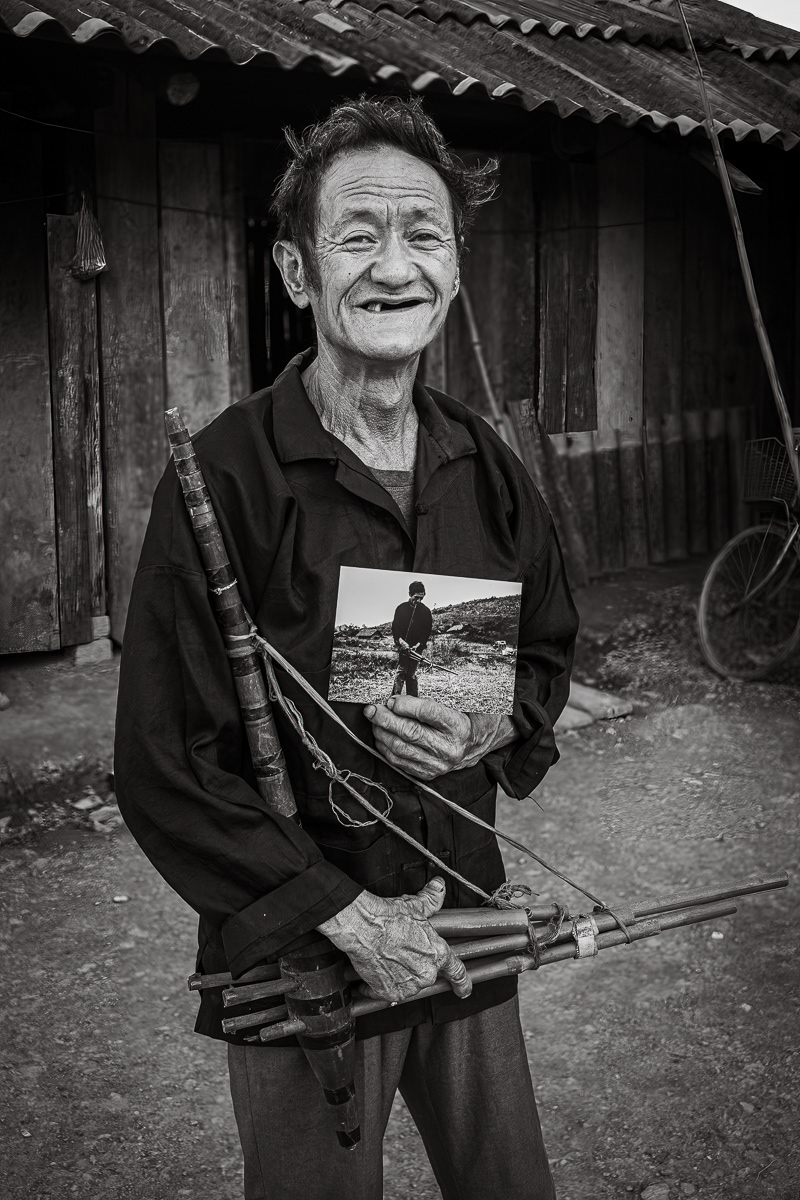
When I first met Mr Pai in November 1992, he was 34 -- a spirited White Hmong musician, carrying his khen Hmong as he returned from a village wedding. The piped bamboo instrument, with its haunting tones, is at the heart of Hmong musical tradition, and Pai played it for me that day, dancing, spinning, and gliding with infectious energy.
In 2024, we met again. Pai still kept his khen, though time had caught up with it; the instrument was broken, silent. Pai's spirit, however, was undimmed. Even without music, he cradled the khen and moved through his familiar dances, singing out revolutionary songs and reciting poems, his artistry finding new ways to endure.
In 2024, we met again. Pai still kept his khen, though time had caught up with it; the instrument was broken, silent. Pai's spirit, however, was undimmed. Even without music, he cradled the khen and moved through his familiar dances, singing out revolutionary songs and reciting poems, his artistry finding new ways to endure.
Continuum Collector's Edition Print:
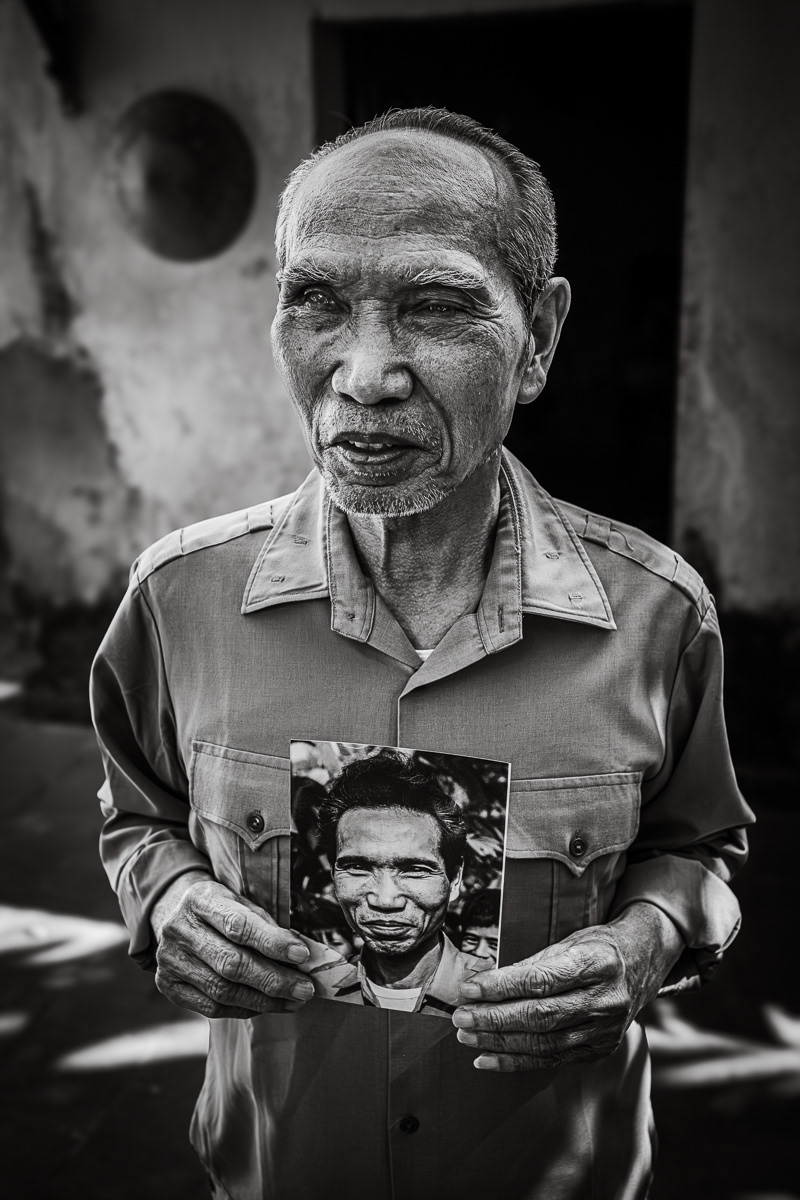
Highway 17 in Bac Ninh is a bustling four-lane road today, but in 1992 it was a potholed, bumpy track with sparse traffic. Passing the hamlet of Guot that year, I came upon a crowd gathered for the official reopening ceremony of Dien Quang pagoda. There, I photographed Nguyen Quy Dien, recently retired after 30 years of military service.
When I returned to Guot in 2024, the transformation was astonishing. The landscape—and the pagoda itself—had changed beyond recognition: once a modest, single-storey structure, Dien Quang had become an impressive multi-building complex, set among manicured gardens fit for an Instagram feed. I found Mr Dien still living nearby with his wife. Now 82 and mostly blind in one eye, he welcomed me warmly, a gracious host, embodying quiet resilience amid a dramatically changed world.
When I returned to Guot in 2024, the transformation was astonishing. The landscape—and the pagoda itself—had changed beyond recognition: once a modest, single-storey structure, Dien Quang had become an impressive multi-building complex, set among manicured gardens fit for an Instagram feed. I found Mr Dien still living nearby with his wife. Now 82 and mostly blind in one eye, he welcomed me warmly, a gracious host, embodying quiet resilience amid a dramatically changed world.
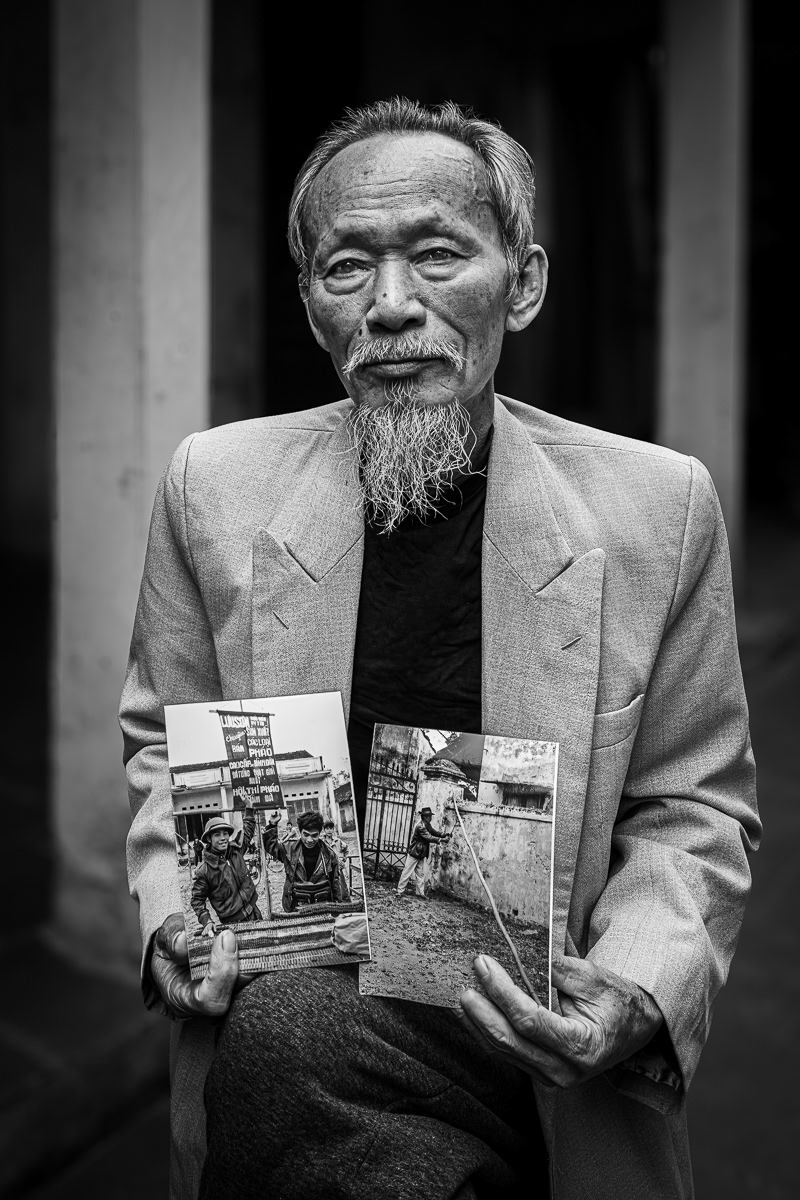
Continuum Collector's Edition Print:
Binh Da was the home of champion firecrackers in Vietnam and it was a sensory whirlwind each Tet and on special occasions before the 1995 ban. In January 1993, I witnessed the bustling main street and alleys crowded with stalls selling loud, smoky firecrackers, a cacophony and haze unlike anything I had experienced. That day, we purchased firecrackers from Mr Nguyen Van Son.
Though the firecracker trade ended abruptly, life went on. In late 2024, I returned to find Mr Son once again, sitting with him in his home as he smoked thouc lao and shared vivid stories about the glory days of firecrackers and his two decades as an army driver. The resilience and warmth of his spirit remain powerful reminders of a vanished era.
Though the firecracker trade ended abruptly, life went on. In late 2024, I returned to find Mr Son once again, sitting with him in his home as he smoked thouc lao and shared vivid stories about the glory days of firecrackers and his two decades as an army driver. The resilience and warmth of his spirit remain powerful reminders of a vanished era.
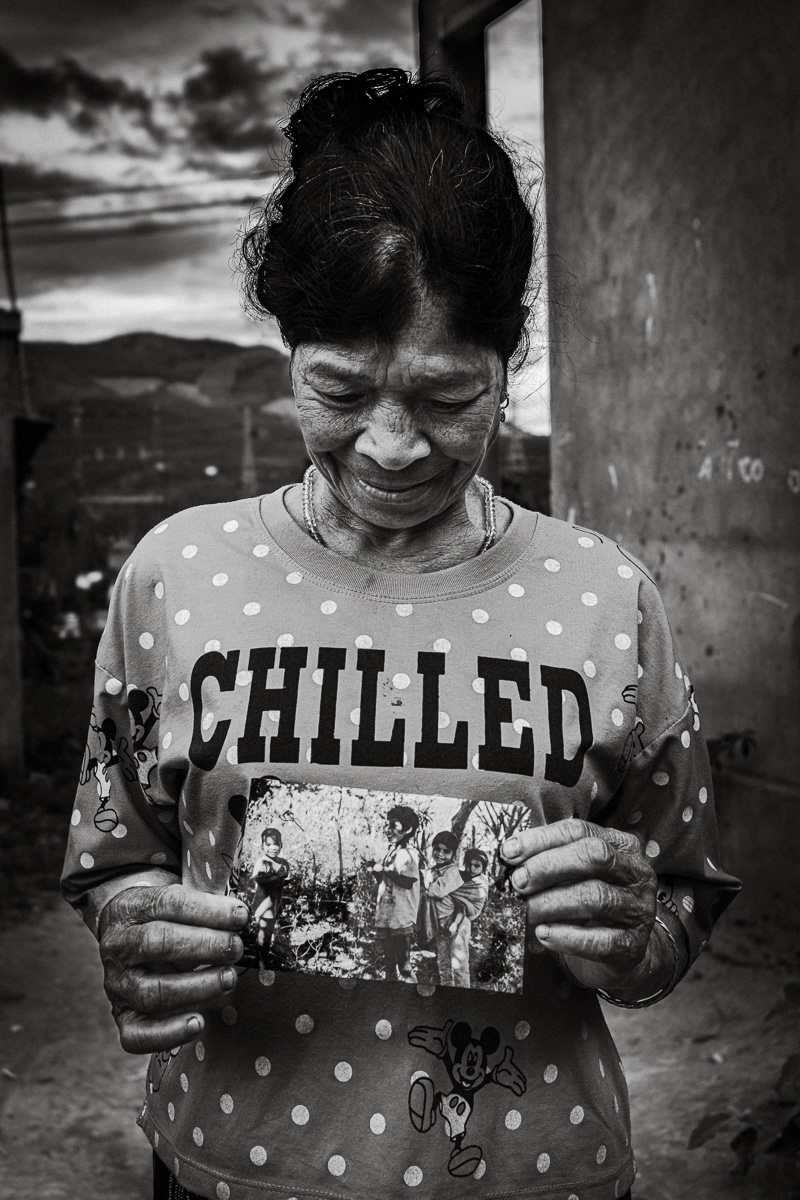
Continuum Collector's Edition Print:
Jerai woman Hyuih stands proudly, clutching a photo from 1992 that shows her three sons—A Truen, Y Thuau, and Y Then—alongside her elder nephew, A Mruon. This portrait bridges past and present: Hyuih’s family and fellow villagers have called these ancestral riverside lands beneath Chu Mom Ray mountain home for generations. In recent decades, however, Ka Du has been transformed. Economic development and migration have brought new faces, new infrastructure, and new cash crops -- reshaping daily life and traditions in ways Hyuih could scarcely have imagined when the old photo was first taken.
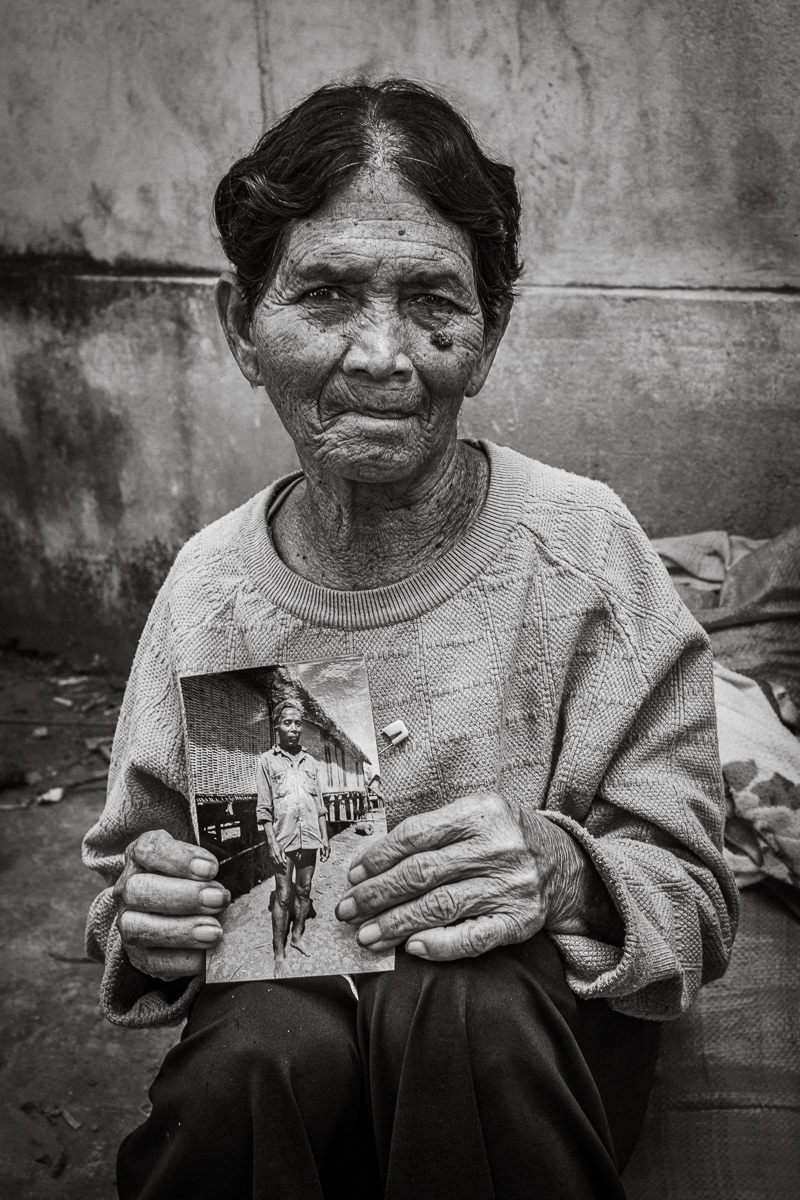
On my first visit to Ia Pia, a remote Jerai village in Gia Lai province, in 1992, I was welcomed by the chief, 65-year-old Mr Kpa Ieng. He spoke little Vietnamese and lived in a simple stilt house, its steps carved from a single tree trunk. The floor was spread with handwoven jute mats, and lining one wall were 25 large earthenware jars of ruou can, a year’s supply of the traditional communal rice wine, reserved for special occasions. At one end of the house, tobacco, maize, and beans dried above the smoky fire.
During our conversation, I was shown a crossbow and the imposing skull of a wild forest cow. “You have to know how to shoot the cow, otherwise it goes completely wild,” the chief said with a knowing smile.
By 2022, Mr Kpa Ieng had passed away, but his widow, the elderly Ro Lan Lat, still lived there. When shown the old photograph, she sat quietly, gazing at her late husband, lost in memory and thought.
During our conversation, I was shown a crossbow and the imposing skull of a wild forest cow. “You have to know how to shoot the cow, otherwise it goes completely wild,” the chief said with a knowing smile.
By 2022, Mr Kpa Ieng had passed away, but his widow, the elderly Ro Lan Lat, still lived there. When shown the old photograph, she sat quietly, gazing at her late husband, lost in memory and thought.
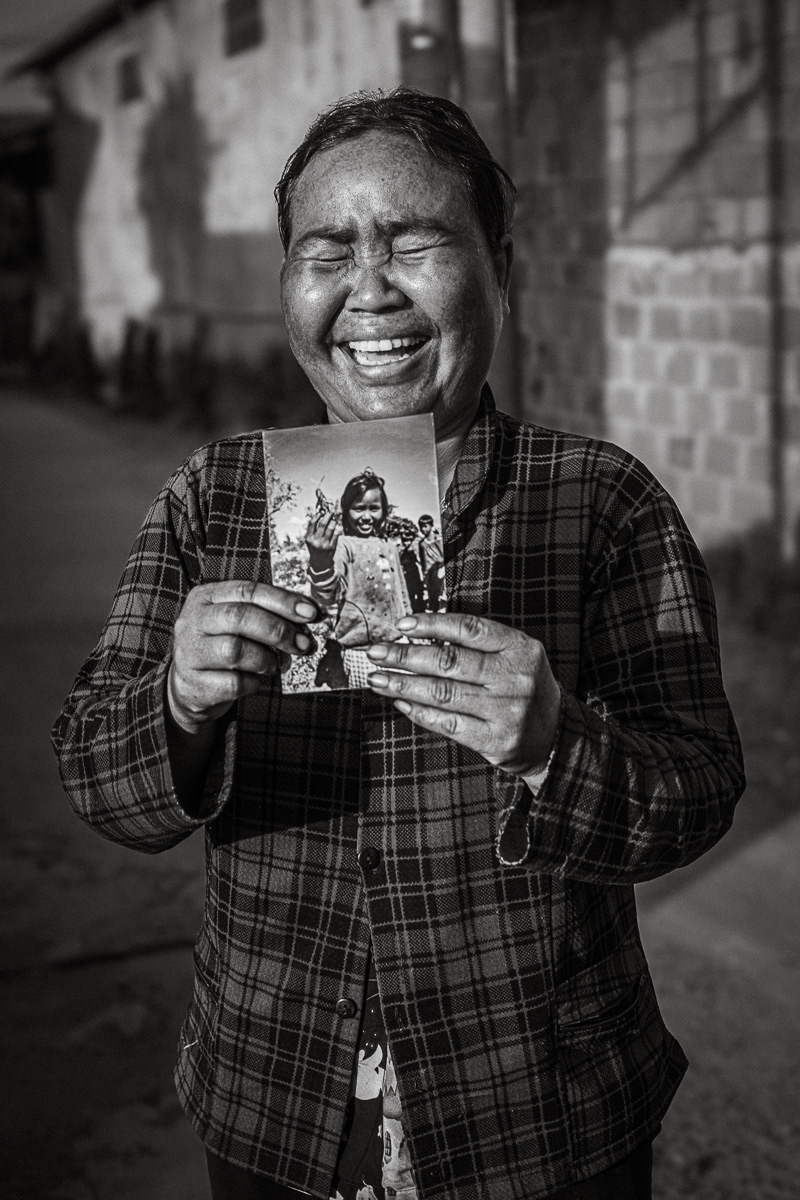
In 1992, just outside Kontum, I visited the Bahnar village of Kon Ro Bang II and photographed a shy young girl I nicknamed “Grasshopper Girl”, as she played with a large green grasshopper. The village at that time clustered around its aging Nha Rong, the traditional communal house with its soaring, sail-like roof standing at the heart of village life.
Three decades later, in 2022, I found Grasshopper Girl once more. Now 42, her name is Y Yon. Though the Nha Rong still stands, the once-rural village has been absorbed into the growing city of Kontum. Where wooden houses once stood, modern concrete homes now line the alleys. But some things endure: Y Yon’s joy was infectious as she showed her childhood photograph to friends and family, dissolving into fits of laughter. It was a genuinely happy reunion, a bright moment amid all the changes.
Three decades later, in 2022, I found Grasshopper Girl once more. Now 42, her name is Y Yon. Though the Nha Rong still stands, the once-rural village has been absorbed into the growing city of Kontum. Where wooden houses once stood, modern concrete homes now line the alleys. But some things endure: Y Yon’s joy was infectious as she showed her childhood photograph to friends and family, dissolving into fits of laughter. It was a genuinely happy reunion, a bright moment amid all the changes.
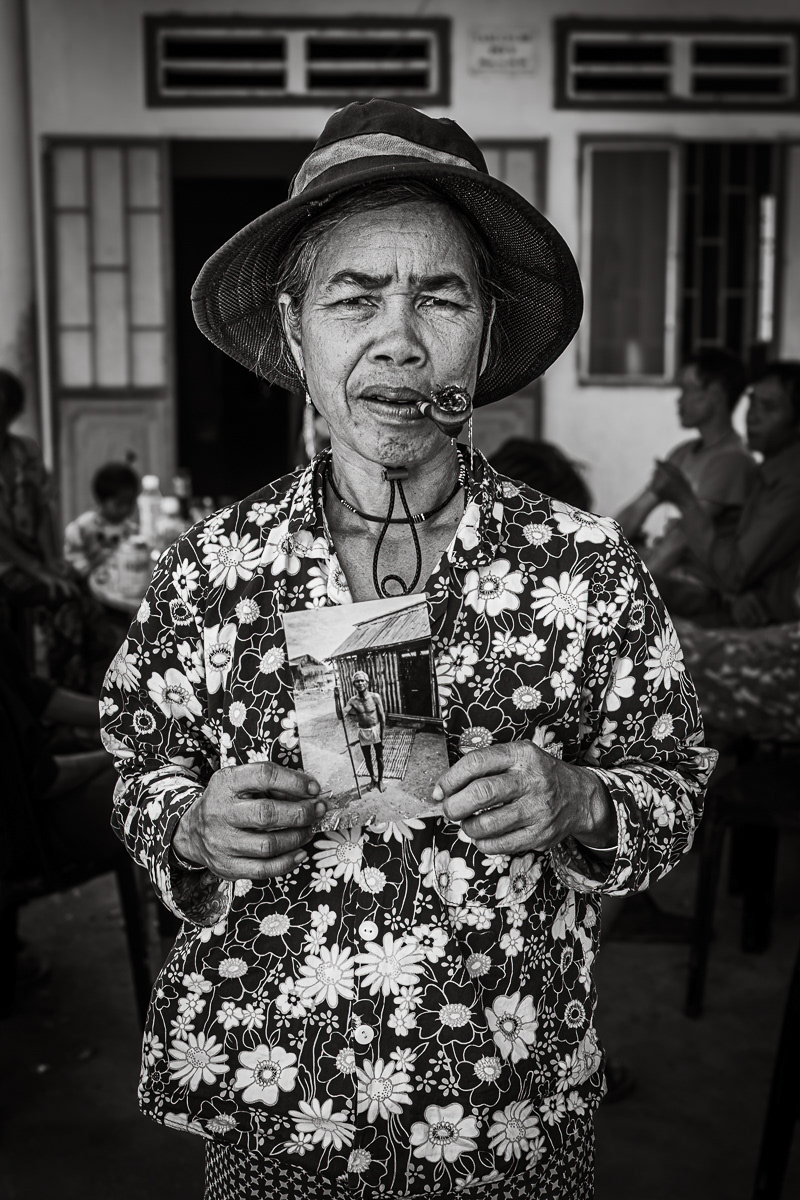
The Brau are Vietnam’s smallest ethnic minority and in 1992 there were fewer than 250 people living in Dak Me, a remote village near the borders of Vietnam, Laos, and Cambodia. The land bore harsh scars from US chemical spraying: blackened stumps of mighty old-growth forest stood among coarse hillside grass, remnants of Agent Orange’s legacy. When I visited, the village itself was literally rising from ashes, having burned down and was then being rebuilt.
My host was the spirited A Lem, the elderly village chief. Clad in a loincloth, brandishing his spear, he performed ceremonial dances with gongs and insisted we share ruou can, the communal rice wine, in proper fashion.
Three decades later, in 2022, I returned to Dak Me and met his daughter, Nang Pha. True to her father’s tradition, she welcomed me over fresh ruou can—topping up the water, and carrying forward the resilient Brau spirit that bridges generations through celebration and survival.
My host was the spirited A Lem, the elderly village chief. Clad in a loincloth, brandishing his spear, he performed ceremonial dances with gongs and insisted we share ruou can, the communal rice wine, in proper fashion.
Three decades later, in 2022, I returned to Dak Me and met his daughter, Nang Pha. True to her father’s tradition, she welcomed me over fresh ruou can—topping up the water, and carrying forward the resilient Brau spirit that bridges generations through celebration and survival.
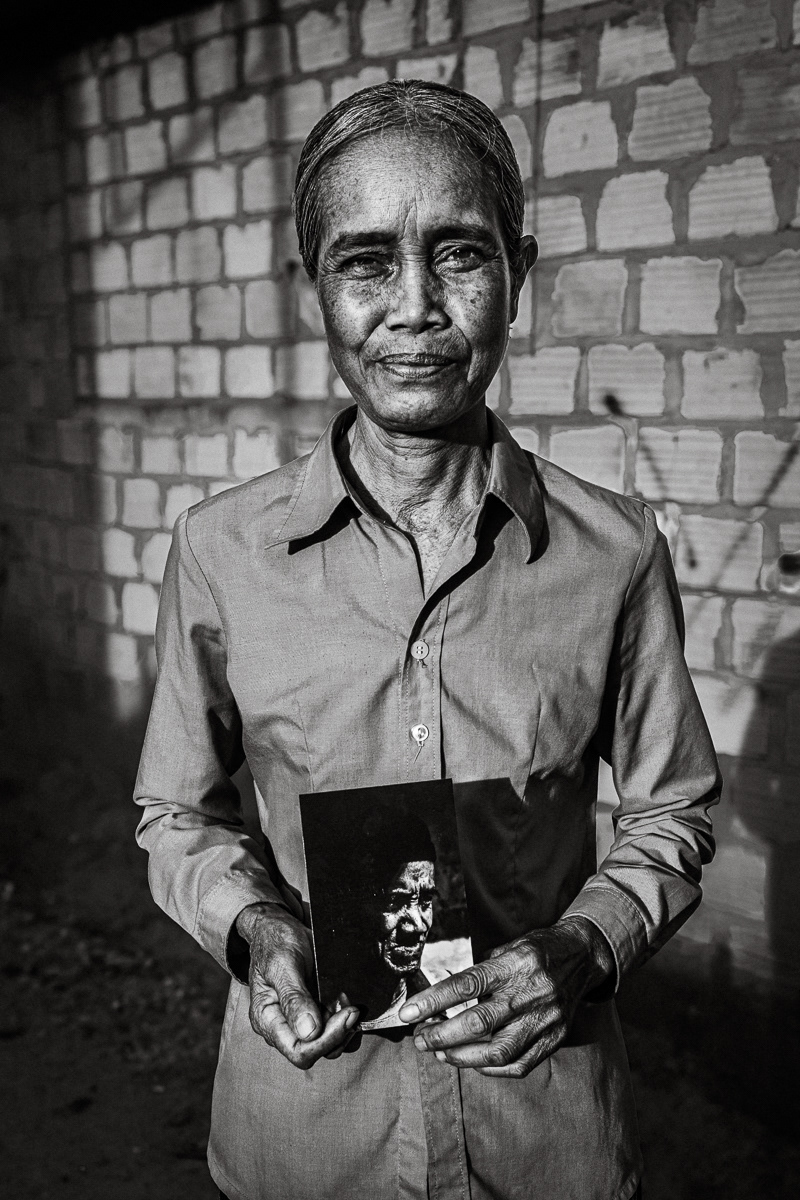
When I returned to Kon Ro Bang in 2022, a crowd of villagers, mostly women, quickly gathered around me, chatting animatedly in Bahnar as they passed around my stack of photographs from 1992. Many recognised faces from long ago. One woman came forward, quietly studying a photo she identified as her father. After a moment’s reflection, she smiled and willingly posed for a new photograph, connecting past with present through the images in her hands.
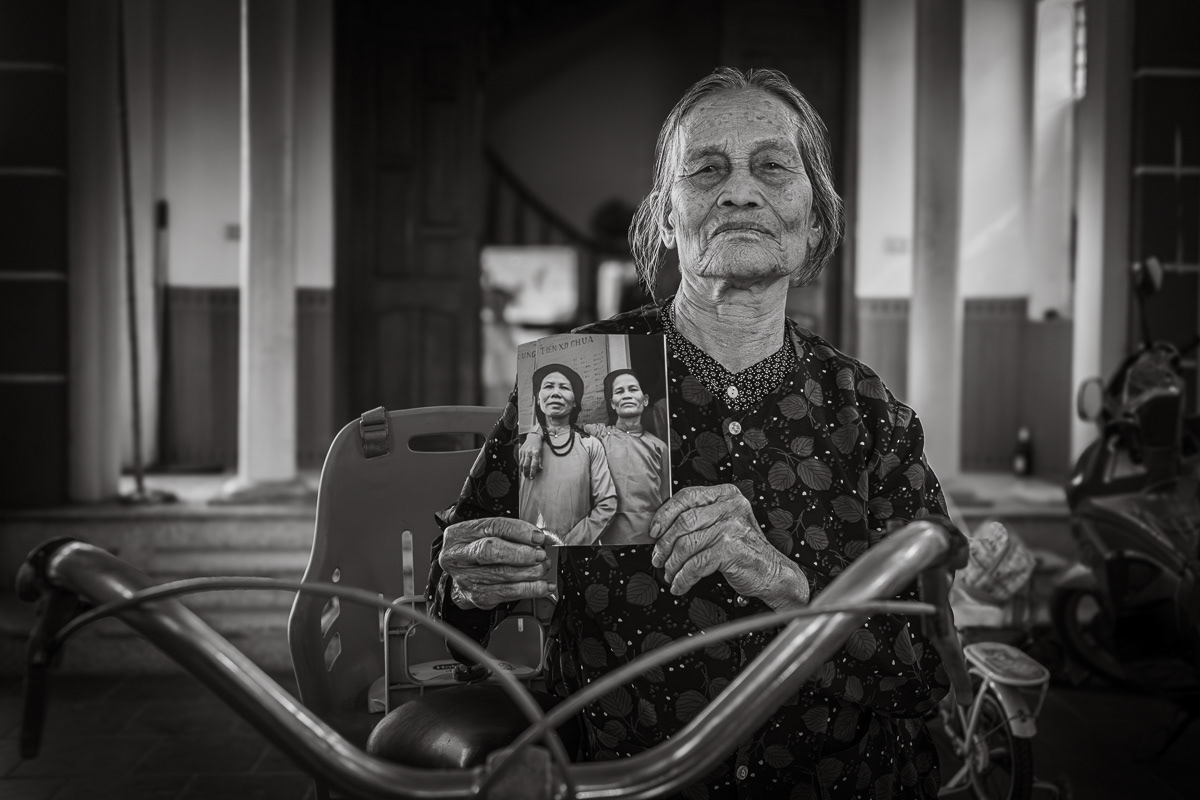
At the reopening ceremony for Dien Quang pagoda in 1992, Nguyen Thi Ton stood out with her arm draped around her best friend, in front of a board listing donations for the restoration. Each donor had given just 1,000 dong, a reminder of the community’s poverty at the time. Not far from the now grand, expanded pagoda, I located her son’s home. He set off to fetch her, and soon the small, lively figure of Ba Ton arrived. Now 87, she greeted me, smiling: “My friend died some years ago, but I am still very strong.” To prove it, she retrieved her bicycle before hopping onto the back of her son’s motorbike, personally escorting me to visit Mr Nguyen Quy Dien nearby.
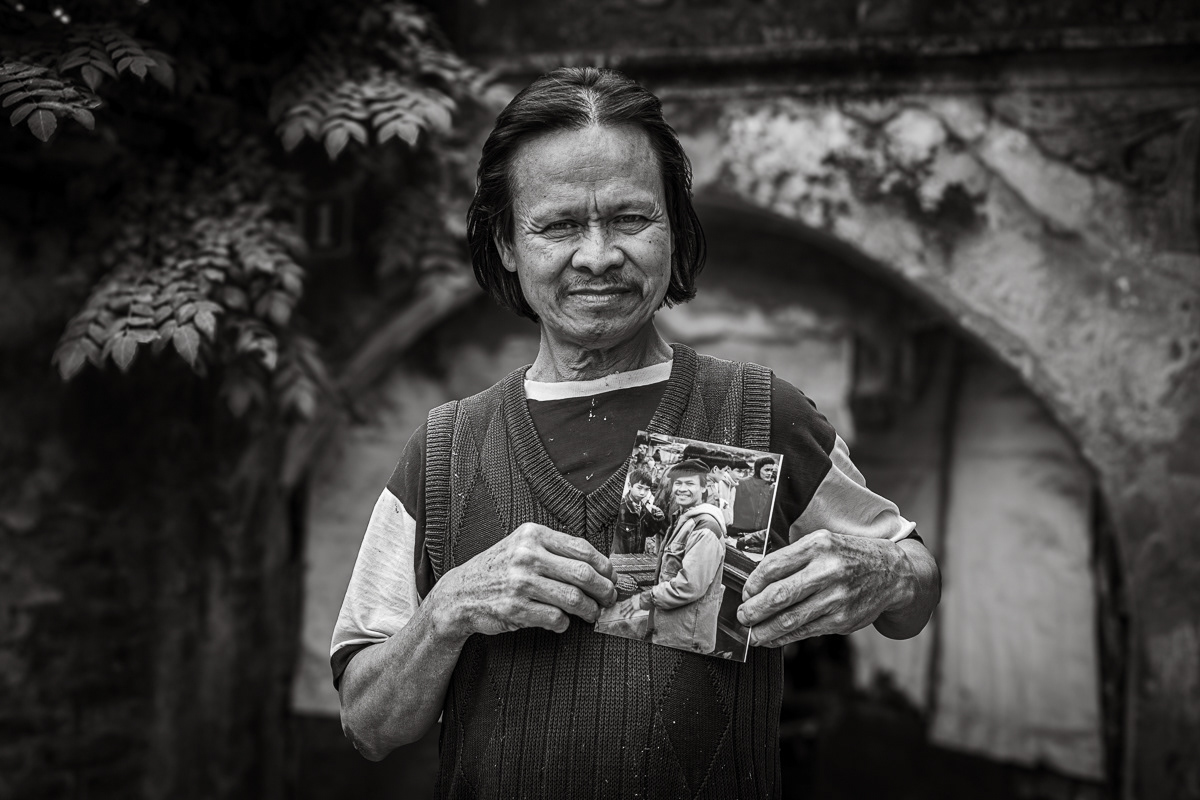
Binh Da in 1992 was a quiet Red River delta village framed by rice fields. Today it’s been almost absorbed into the growing outskirts of Hanoi, and what was once a peaceful country road is now the busy, dusty, and noisy Highway 21B. Returning with old photos from the firecracker market of 1993, I followed my usual approach: asking around, photos in hand, until I met Mr Nguyen Van Thanh. Back in those days, his family was busy and prosperous making firecrackers, but after the 1995 ban, he told me, times became very tough. Still, when we spoke, the mood was positive, life was getting better and Thanh was preparing for his daughter’s wedding the very next day.
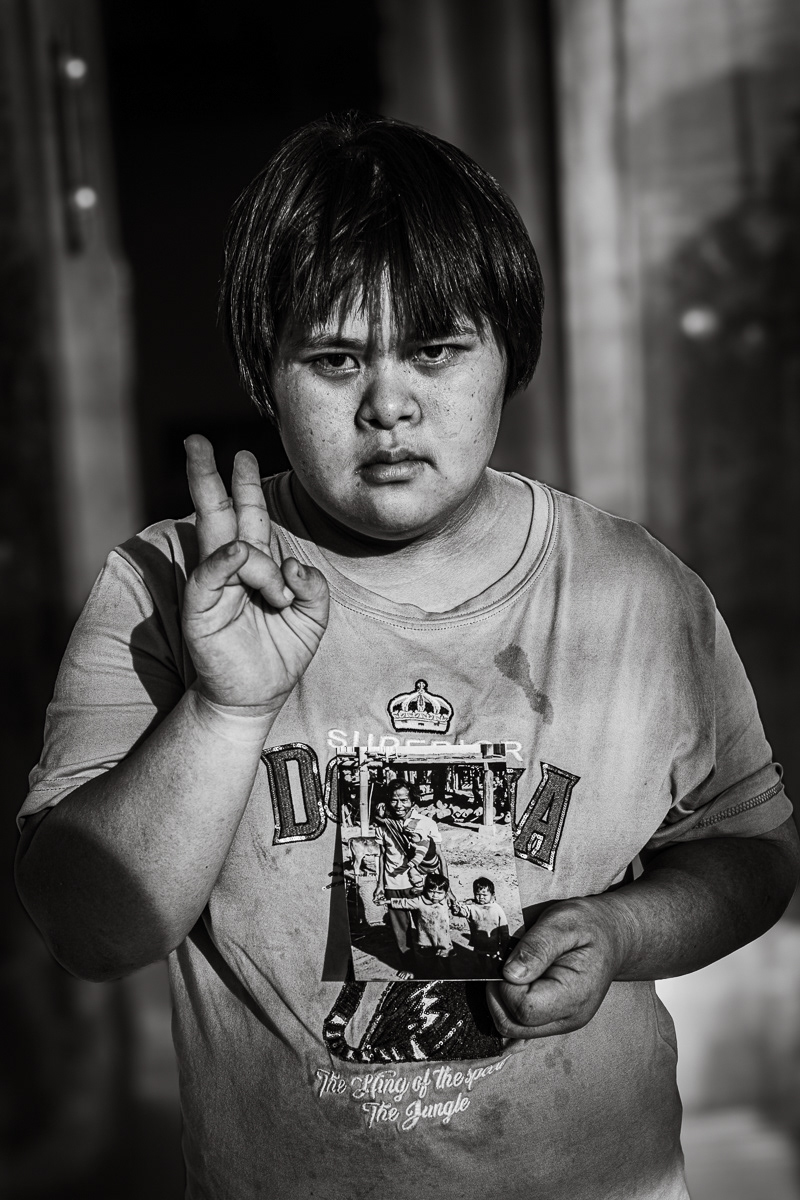
Within the crowds that gathered around me in Kon Ro Bang in 1992, I noticed a father with his two young sons, a reminder of how hard life was in this poor community along the northern bank of the Dak Bla river. When I returned in 2022, I was able to reconnect with several families I’d photographed three decades before. Among them was this Bahnar boy with Down syndrome. I handed him a photo from 1992 showing his father and grandfather. He responded with a huge, beaming smile, and when it was time for new photos, he flashed a cheerful V-for-victory sign for the camera. His father was away that day, but the joy of recognition and memory remained.
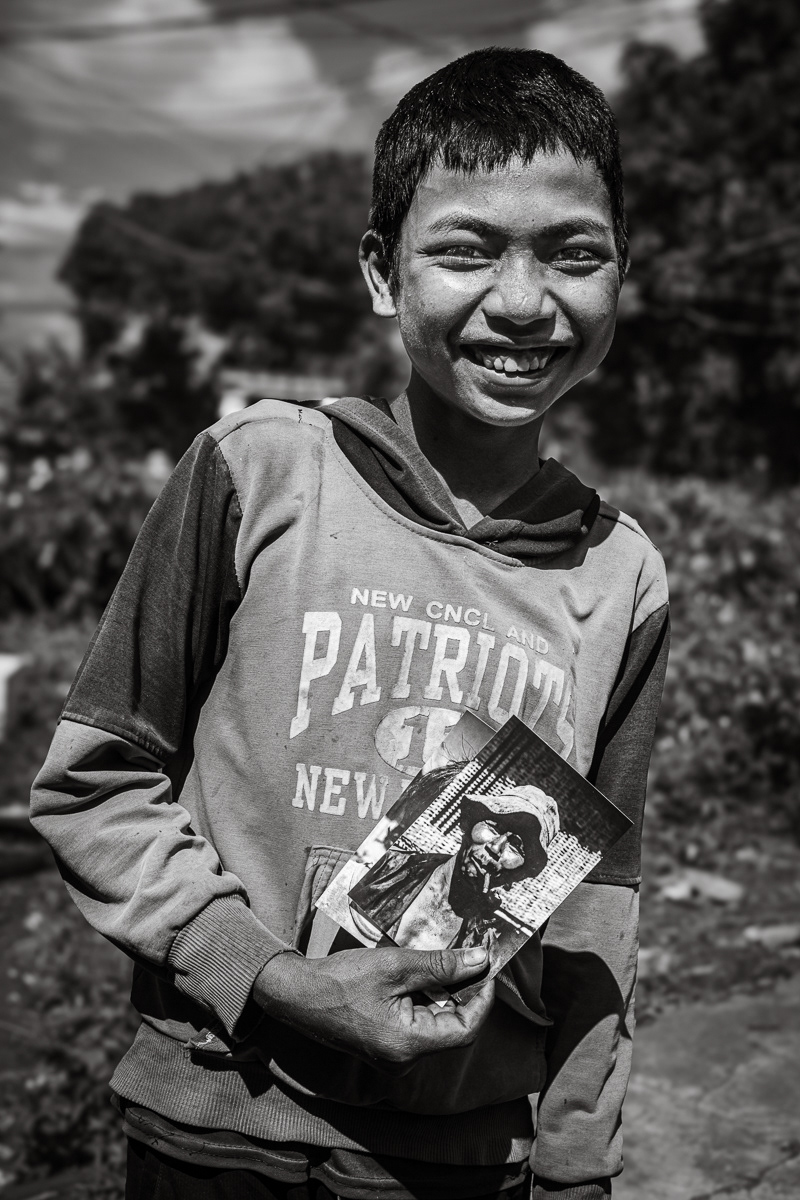
Despite all the changes happening around them, one thing stood out on my return visits: the communities I photographed in 1992 were still there. Life had changed, mobile phones were now common, whereas three decades ago, even owning a bicycle was a mark of prosperity.
On this trip, I met a Jerai teenager and handed him an old photograph of his grandfather, standing outside his traditional house. It was the first time he’d seen a photo from the past like this, and his excitement was unmistakable. The past, for a moment, felt close at hand.
On this trip, I met a Jerai teenager and handed him an old photograph of his grandfather, standing outside his traditional house. It was the first time he’d seen a photo from the past like this, and his excitement was unmistakable. The past, for a moment, felt close at hand.
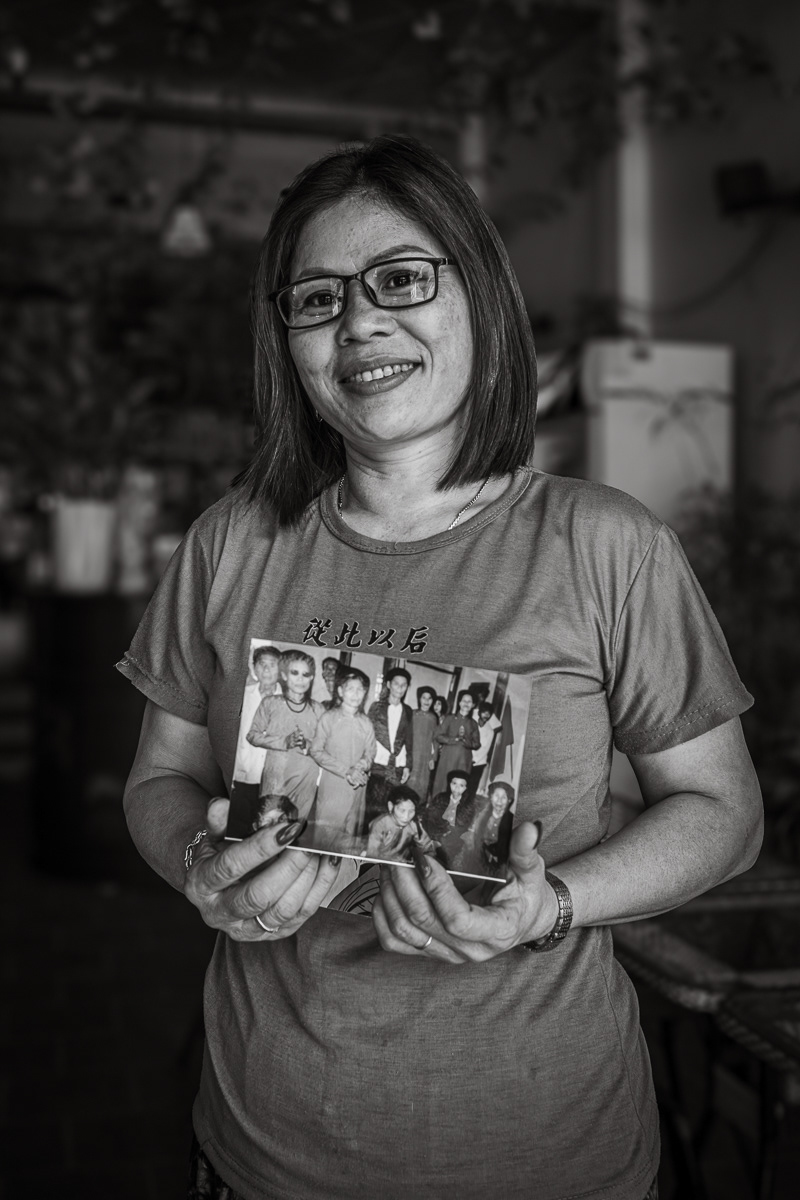
The pagoda reopening ceremony in November 1992 drew a large crowd from the local area and neighbouring villages. People dressed in bright yellow and red costumes performed ceremonial duties, while local farmers gathered to watch and children played noisily. Drums banged and bells rang, mixing with the lively hubbub of voices. The sudden appearance of a foreigner caused quite a stir.
In November 2024, I returned and visited Café 99 on the main road, owned by 52-year-old Nguyen Thi Thai. Showing her photos from the 1992 ceremony, she immediately recognised everyone, naming them and noting who was still alive. Among the images, she located a photo of her mother, Nguyen Thi Lien, easily identified by her sunglasses.
In November 2024, I returned and visited Café 99 on the main road, owned by 52-year-old Nguyen Thi Thai. Showing her photos from the 1992 ceremony, she immediately recognised everyone, naming them and noting who was still alive. Among the images, she located a photo of her mother, Nguyen Thi Lien, easily identified by her sunglasses.
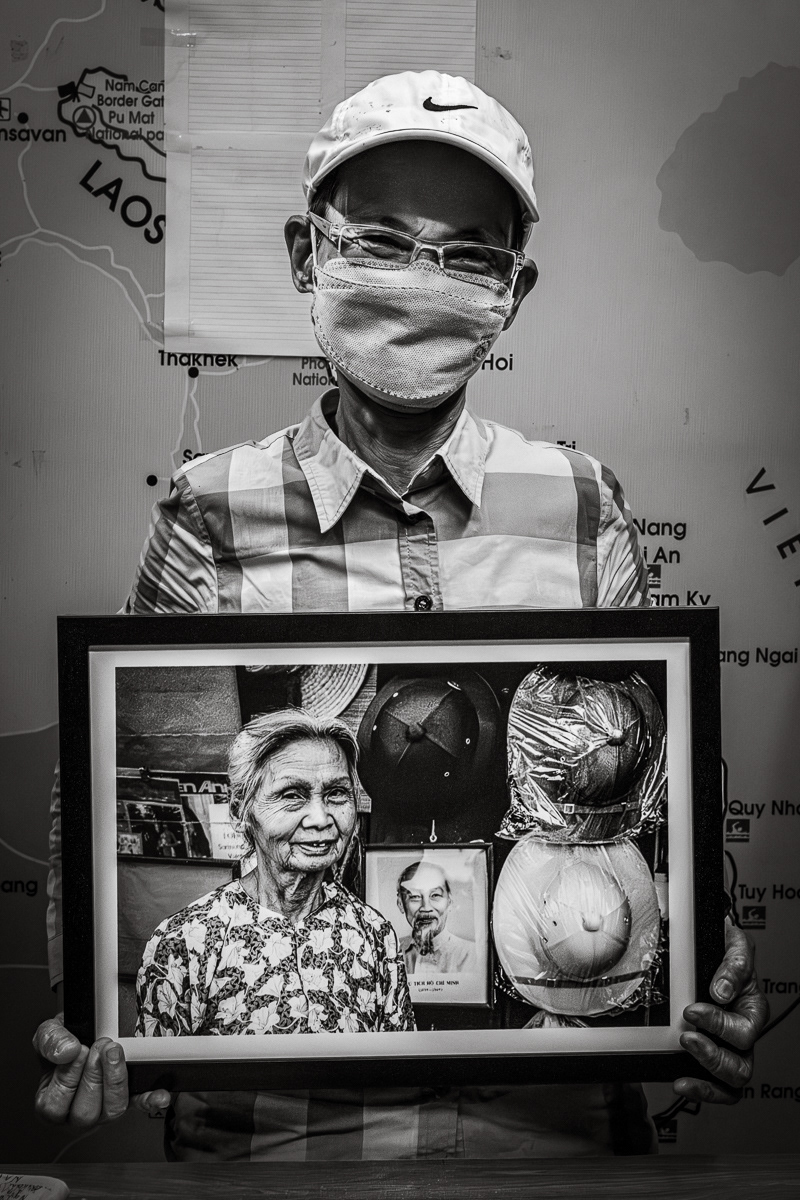
A couple of days after I first arrived in Hanoi in 1992, I wandered around Hoan Kiem Lake and stopped at a small shop filled with hats, portraits of Ho Chi Minh, and tourist souvenirs. The shopkeeper, 73-year-old Mrs Bui Thi Thanh Nien, welcomed me in French. My own French was limited and my Vietnamese nonexistent, but her warmth and passion for the language made conversation possible.
When I returned in 2024, I found the same address was still home to a shop and although Mrs Nien had passed away 15 years earlier, her daughter, Nguyen Thi Xuan Huong, was still there. On the shelves were her mother’s belongings: her spectacles, a worn French dictionary, a notebook of poetry and writings, and other keepsakes, each a reminder of the educated, spirited woman who once ran the shop. Huong keeps the place open to honour her mother, preserving a small haven of memory in the ever-changing heart of the city.
When I returned in 2024, I found the same address was still home to a shop and although Mrs Nien had passed away 15 years earlier, her daughter, Nguyen Thi Xuan Huong, was still there. On the shelves were her mother’s belongings: her spectacles, a worn French dictionary, a notebook of poetry and writings, and other keepsakes, each a reminder of the educated, spirited woman who once ran the shop. Huong keeps the place open to honour her mother, preserving a small haven of memory in the ever-changing heart of the city.
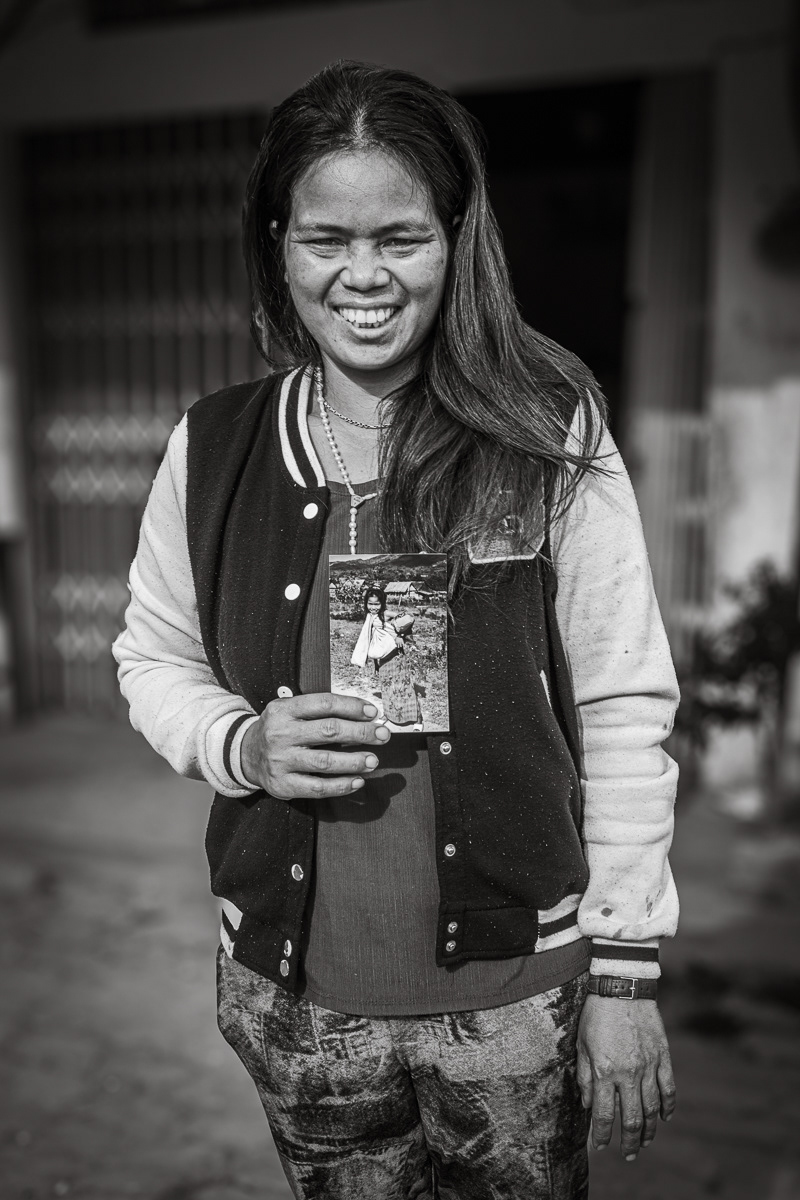
In 1992, among those I photographed in the Jerai village of Ka Du was a 10-year-old girl carrying a baby on her back. When I returned in 2022, I found her name was Y Trinh. Looking at the old photograph, she reflected on the past: “As you get older, there’s always more worries, but back then everything was worry free,” she told me. “I cried for my mother to get me this dress in the photo, I wanted it so much. My sandals were 3,000 dong, but my mother couldn’t afford them. Even my hair grip was a struggle to get— I loved these clothes.” The memories clearly moved her, and she wiped away a tear.
As we talked, a man appeared, shook my hand, and asked my name. He seemed ready to leave but then turned back, held my head gently in his hands, and planted a big kiss on my cheek—a spontaneous gesture in a moment full of emotion and memory.
As we talked, a man appeared, shook my hand, and asked my name. He seemed ready to leave but then turned back, held my head gently in his hands, and planted a big kiss on my cheek—a spontaneous gesture in a moment full of emotion and memory.
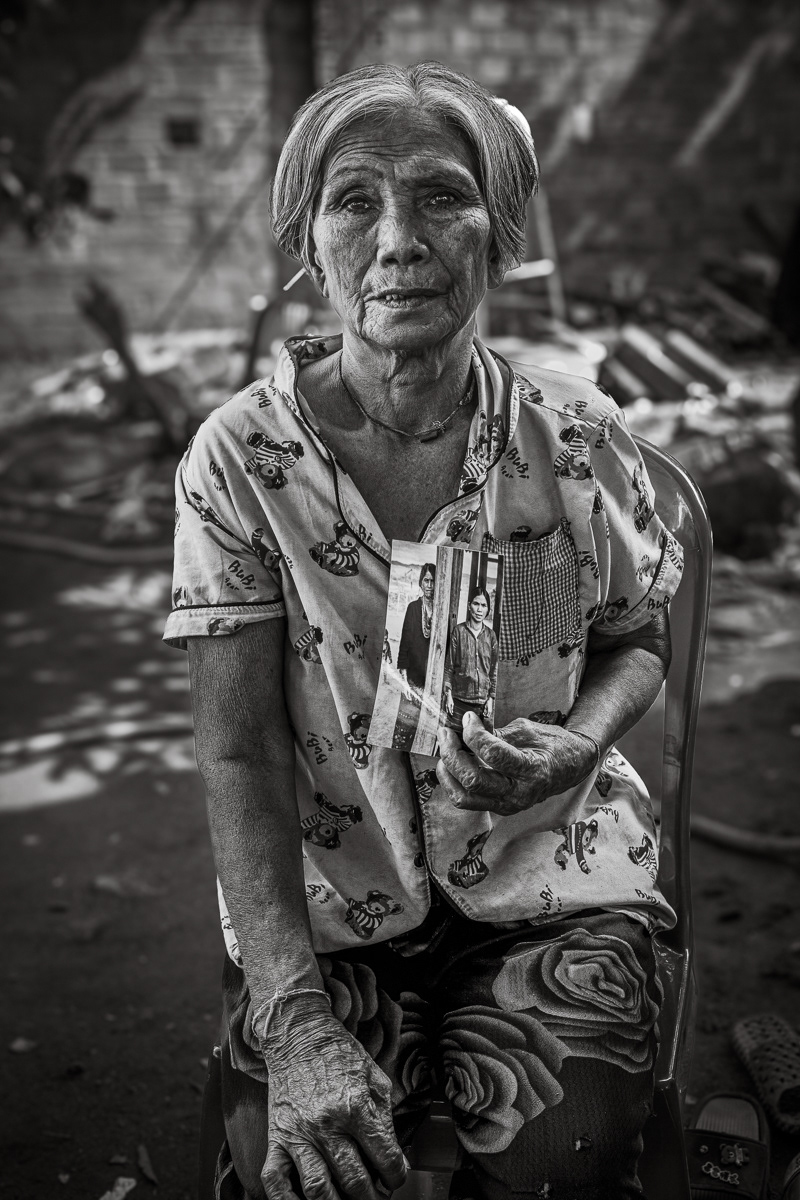
In 1992, I was told I was the first foreigner to visit the Brau since the end of the war 17 years earlier. The village chief, A Lem, an energetic man with filed teeth, danced and posed for photos, while 43-year-old Nang Giang B stood quietly to one side, observing. Giang B was suffering from goitre, with a visible swelling on her throat. She showed me her shrine dedicated to Paxay, the supreme sky spirit, hoping for a cure.
When I returned in late 2022, Giang B was 83 and very frail. She struggled to walk and complained of widespread aches and pains. She had little access to medicine and was very poor.
When I returned in late 2022, Giang B was 83 and very frail. She struggled to walk and complained of widespread aches and pains. She had little access to medicine and was very poor.
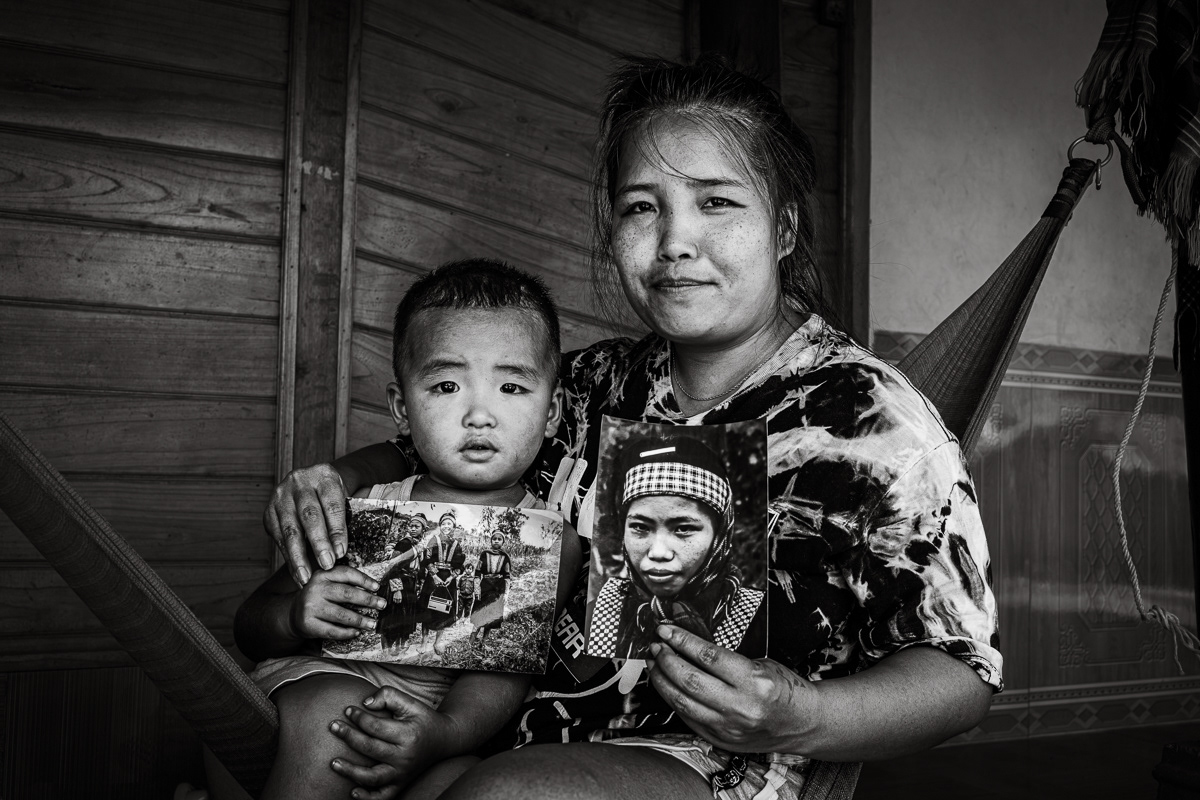
In 1992, in the remote Hmong village of Choi Hong, I met three teenage girls. One stood out, carrying a battered transistor radio that blared a loud, distorted version of Schubert’s Ave Maria. She became known to me as “Radio Girl.” More than three decades later, in 2024, I finally tracked down her family. Her daughter and grandson were relaxing in a hammock on the veranda of their wooden house. Ly Thi Du, the original Radio Girl, was then 15 years old in the photo but was away working in Bac Ninh at the time of my visit. Phuong called her via the Zalo messaging app and they had a video call so her mother could see the photo.
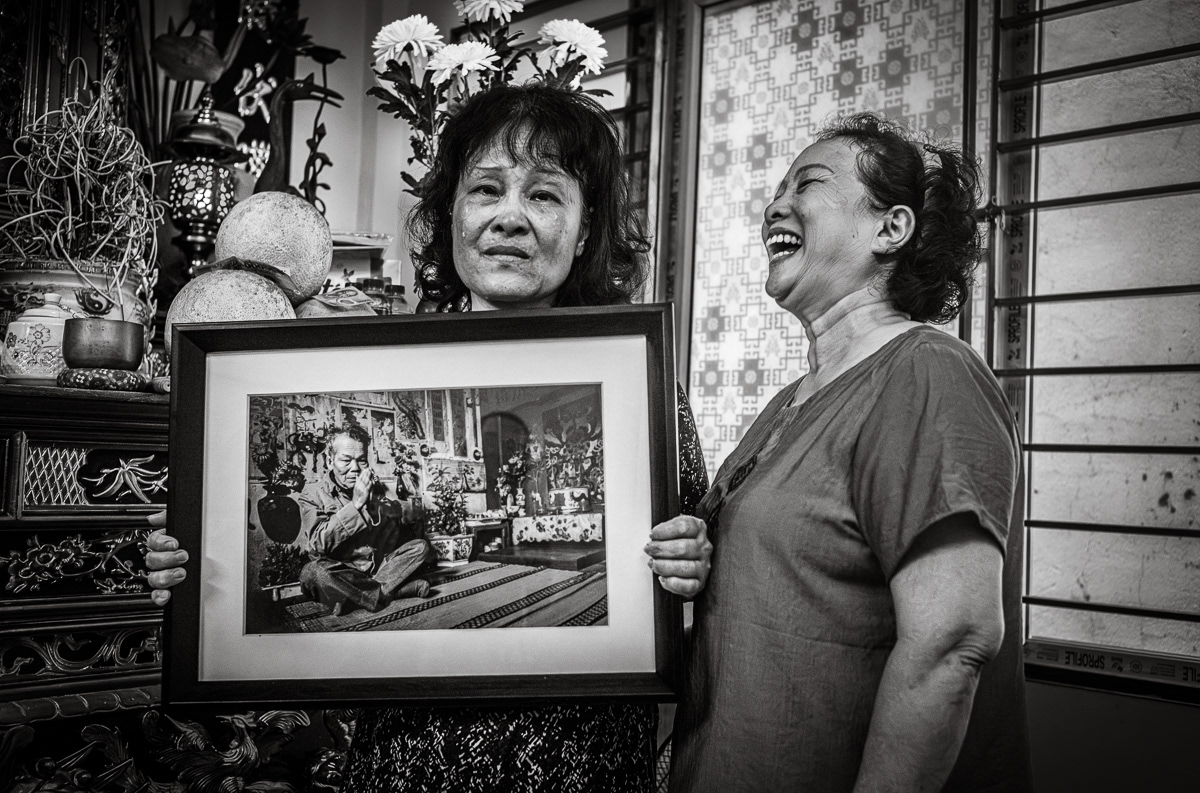
In 1993, Mr Bui Huy Truyen, aged 71, lived with his family in a beautiful, ancient tube house—over 200 years old—in Ngo Phat Loc, Hanoi’s old quarter. Proud of his home, he took me up a narrow ladder to a small attic room where his family shrines were kept. When I returned in 2024, I found the address again and met his daughter-in-law, Hanh, and daughter, Ngo. The house had been completely rebuilt, with little left of the original structure. Yet on the top floor, an altar room remained, displaying mementos of Mr Truyen. It was a day filled with strong emotions: Hanh laughed openly, while Ngo’s tears mixed sorrow and joy.
Continuum: Vietnam Archives
The following images were taken on my initial journeys around Vietnam in October 1992 - January 1993. The people featured here are some of those that I intend to find again as I continue my quest to reconnect with some of those I met and photographed more than 30 years ago.
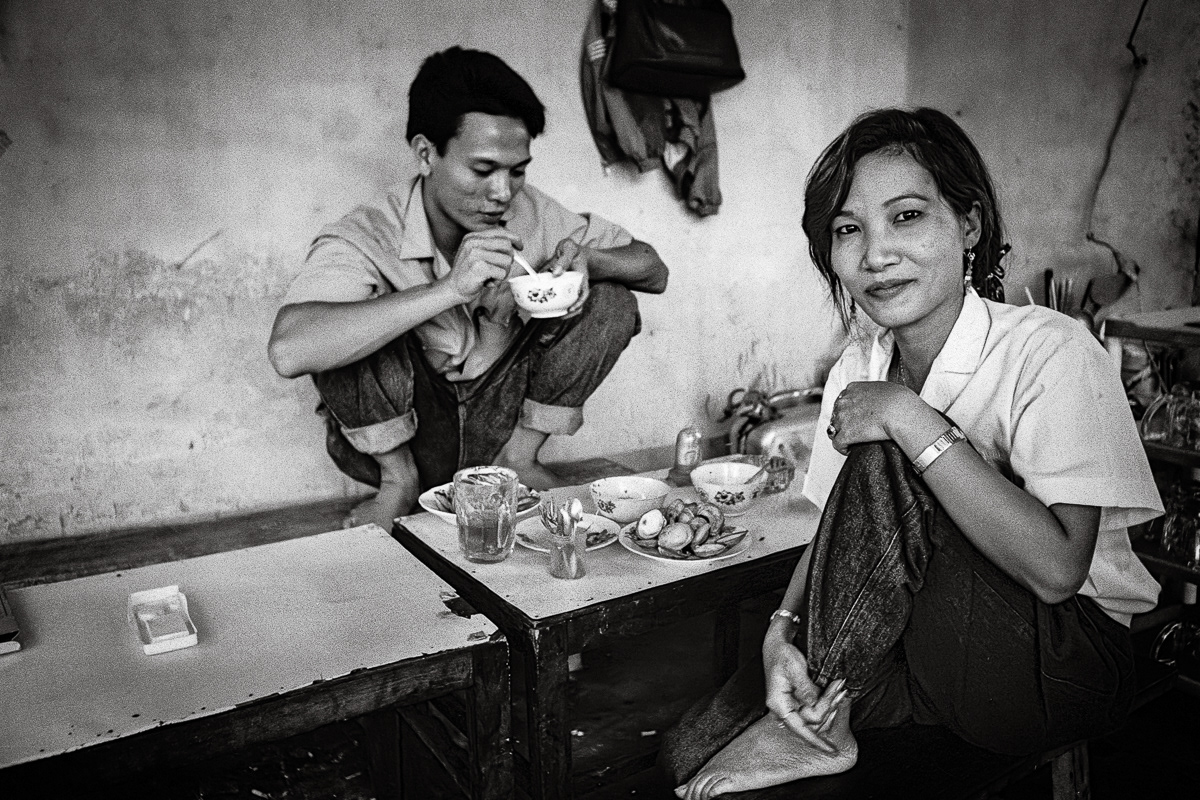
Hong Gai, Quang Ninh, was a busy fishing harbour beside the magnificent Ha Long Bay. The waters were filled with boats that served as homes for families, their dogs, and sometimes chickens. Foreign visitors were a rare sight, and as I wandered through the harbour, locals called out greetings. This young couple was enjoying a simple, delicious lunch of clams and other fresh seafood—a quiet moment amid the lively daily rhythms of harbour life.
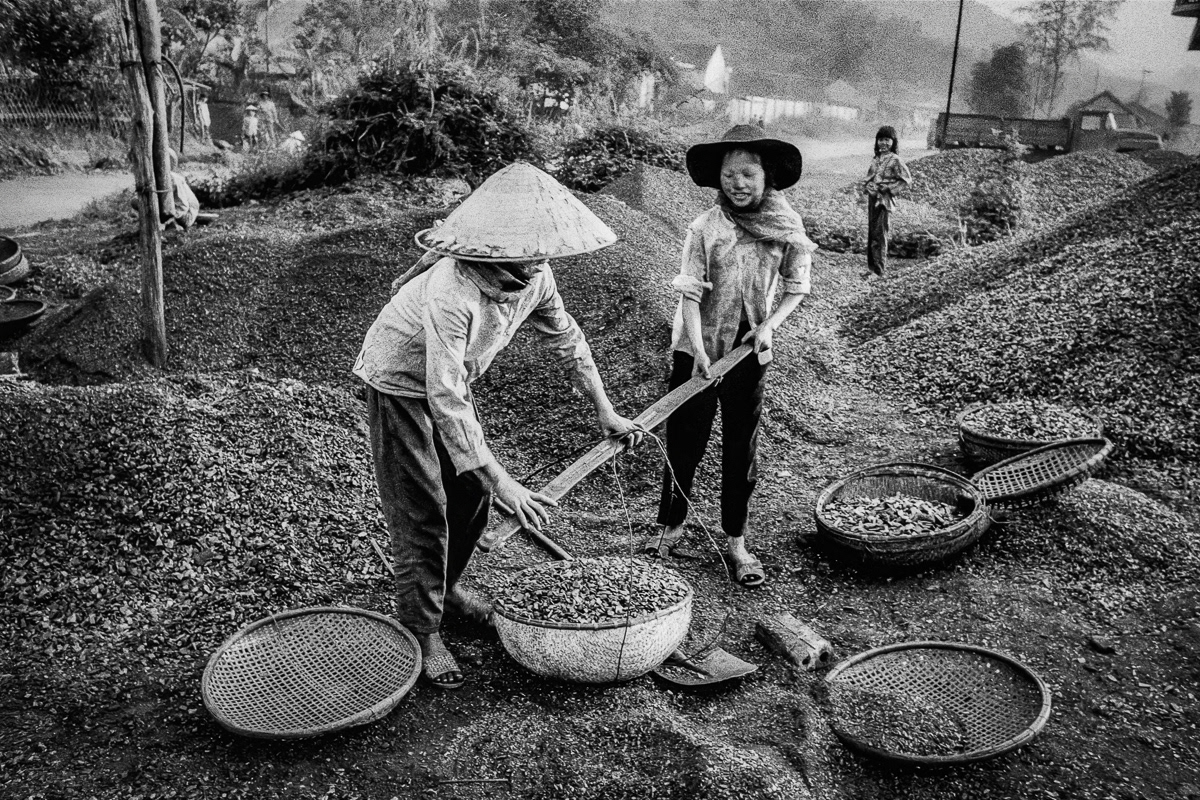
Travelling north along the coast in Quang Ninh, three things stood out: the striking beauty of Ha Long Bay with its countless jagged limestone islands; the lively fishing communities living on the water; and coal. Around Cam Pha, everything—people, animals, market goods, buses—was blanketed in thick black coal dust. I could taste it on the air and feel fine grains between my teeth. At the vast open-cast Coc Sau coalmine, the scale of the industry was apparent. The mine supported local people in both official and unofficial ways. Along the roadside, people sorted and washed coal dust or picked through slag heaps for scraps. Among them were children. I often wonder what became of those young faces.
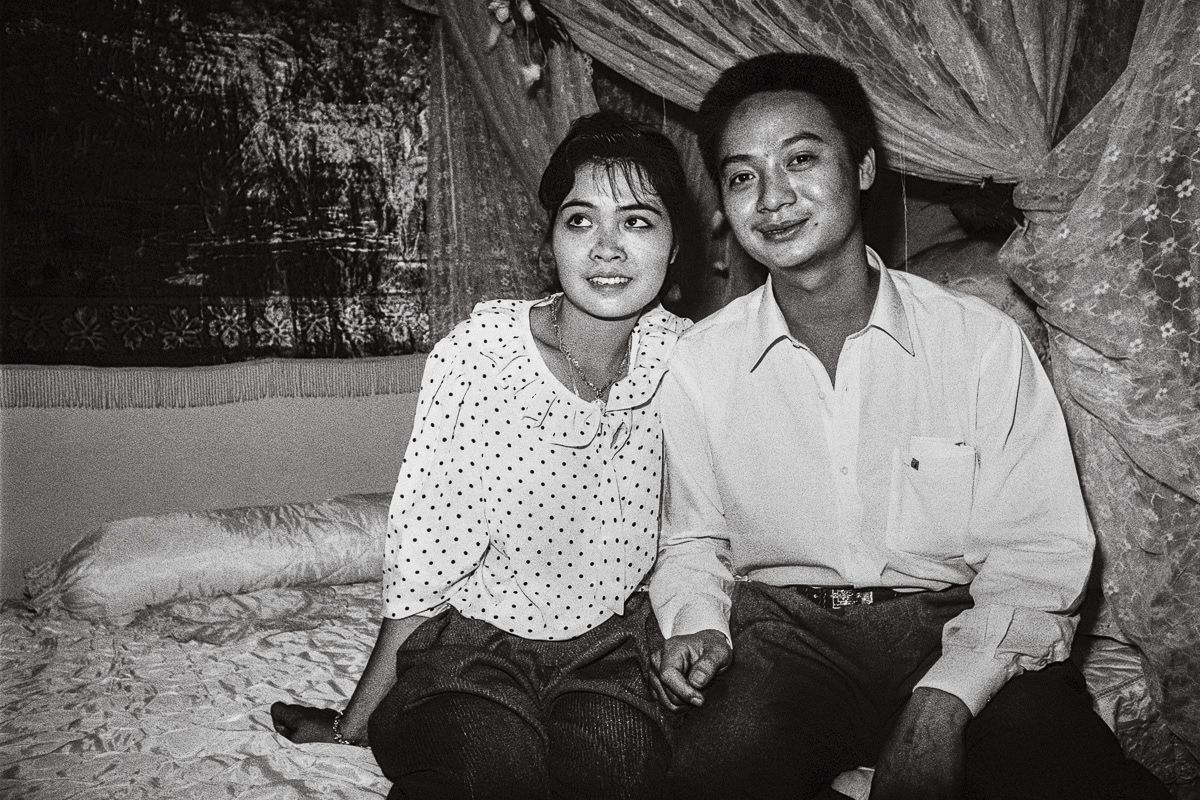
A cacophony of firecrackers announced the arrival of the wedding party returning to the groom’s home. I was sitting, drinking tea at a small stall in Lang Son market when, upon seeing me, they immediately invited me to join their celebrations. Spirits were high, and a lively party soon unfolded. We feasted and raised numerous toasts to international friendship and world peace, sharing Chinese beer alongside homemade rice alcohol. This photograph captures the bride and groom in their bedroom, just before their first night together.
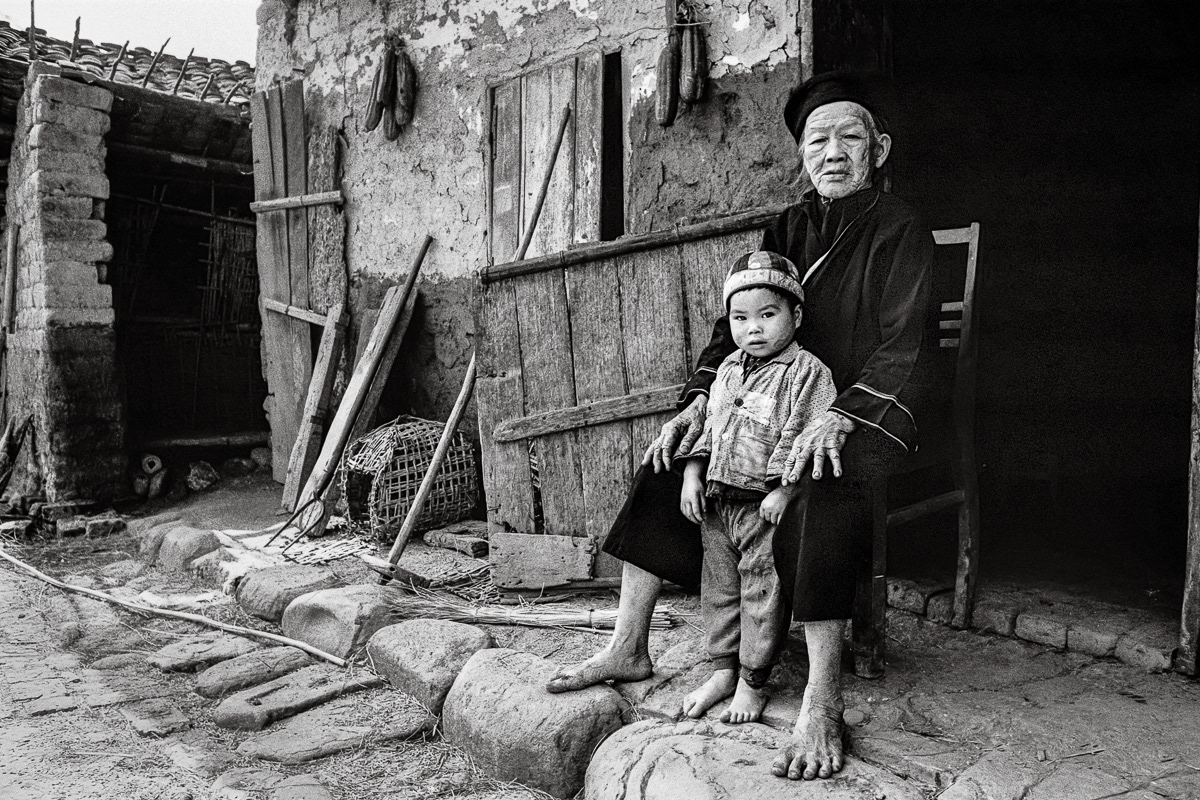
Up in the mountains close to Lang Son, connected to the outside world by a narrow, twisting track, lies the Nung ethnic minority village of Na Ten. The harvest had been gathered, and when I arrived, a woman was raking over drying rice grain in her courtyard. She was also caring for her young great-grandson while his parents were away working in the fields.
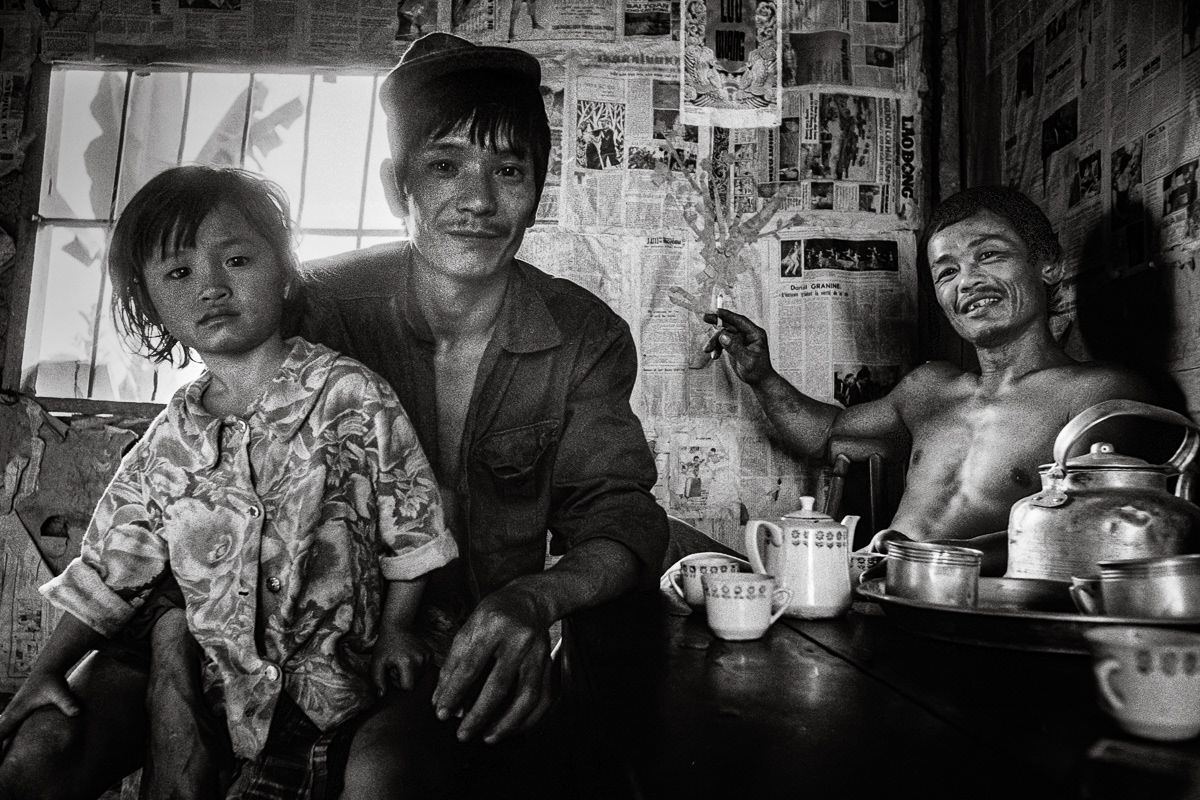
After a bone-jarring 55 km, three-hour drive, we arrived in the small dusty town of Nguyen Binh, nestled 650 metres above sea level in the rugged mountains of Cao Bang province. It was market day — a riot of colour, with people wearing the distinctive traditional costumes of the various ethnic minorities who live in the area. There were no cars, just a few motorbikes, bicycles, ponies and carts.
This group sat in a small wooden shack by the market, where, as was often the case, the walls were papered with old newspapers. As everywhere I visited, I was invited to sit down and drink tea.
This group sat in a small wooden shack by the market, where, as was often the case, the walls were papered with old newspapers. As everywhere I visited, I was invited to sit down and drink tea.
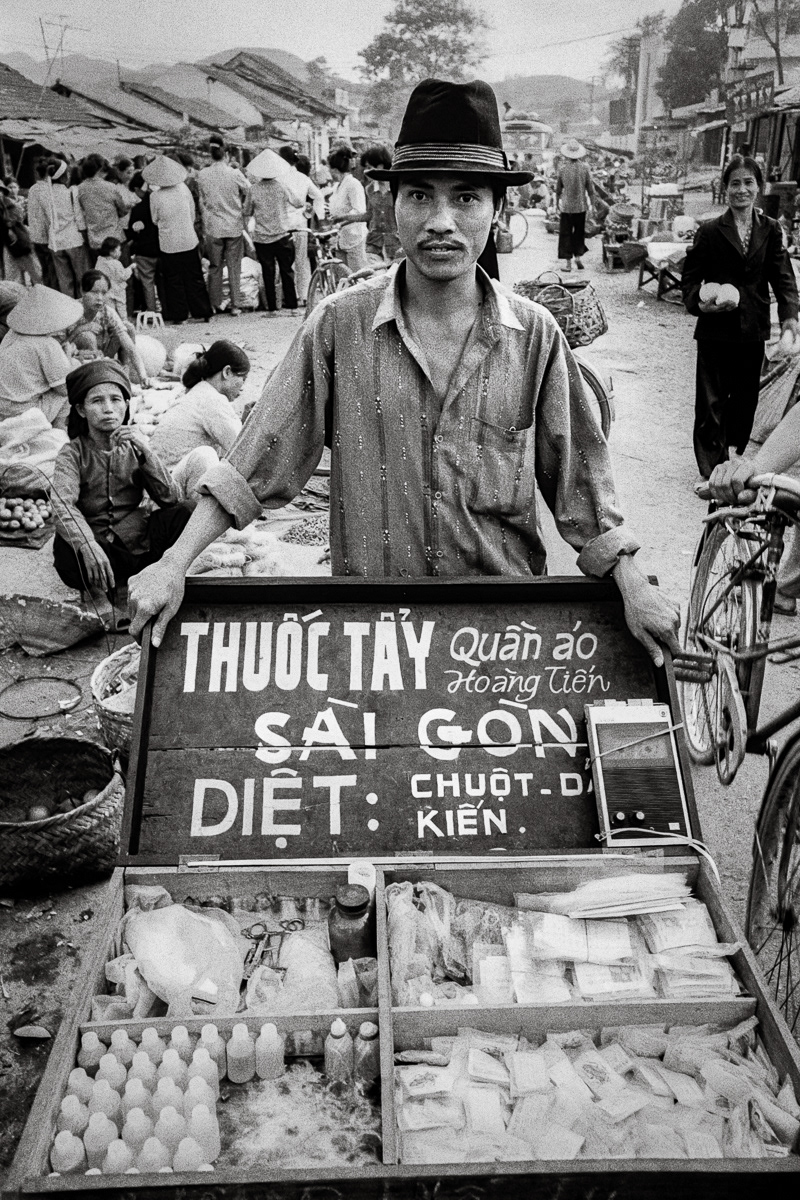
Nguyen Binh market was full of hustle and bustle—dusty and noisy. A bleach and rat poison seller pushed his cart along, carrying a small cassette player wired to an old speaker that screeched out distorted, sentimental love songs. Despite this, he was a determined and entrepreneurial man, making a living in the gradually opening markets.
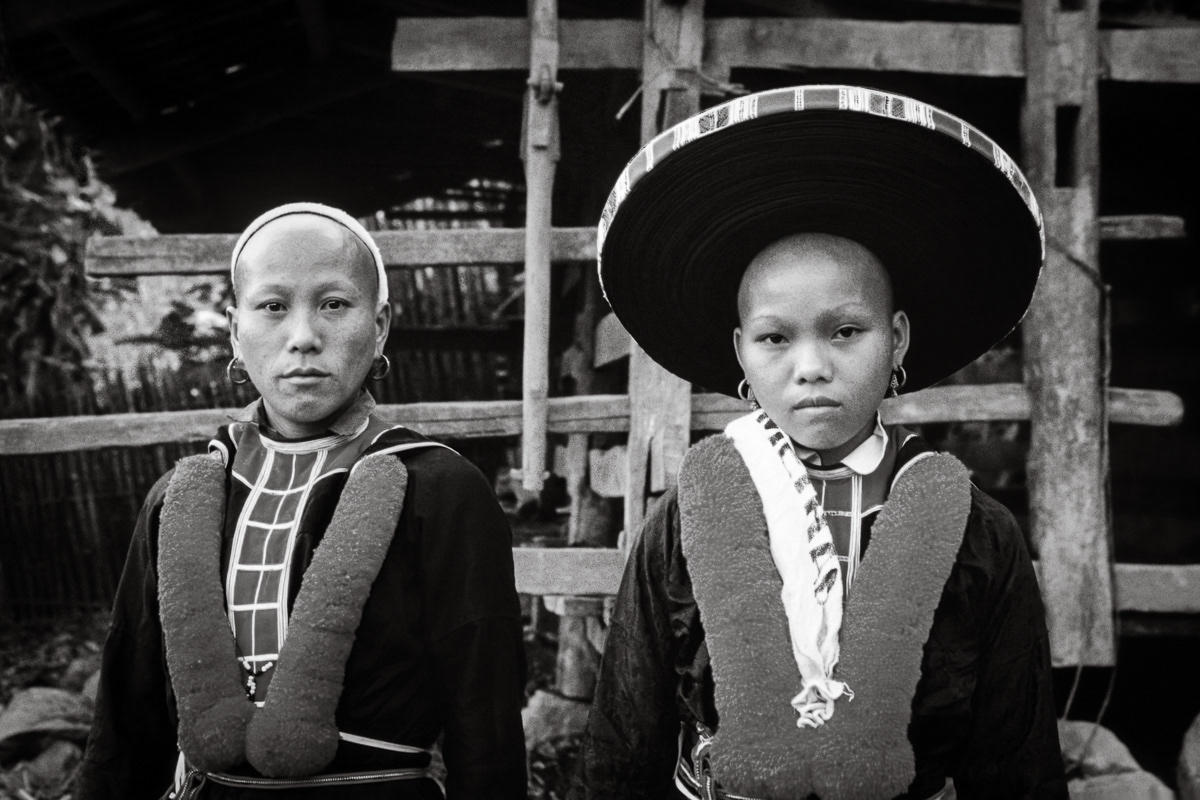
Thai Hoc was a village perched on a steep hillside in Cao Bang province, home to members of the Red Dao ethnic minority whose way of life had remained unchanged for generations. I met 36-year-old Mrs Ly Mui Tay and her 17-year-old daughter, Ly Mui Yet. Since then, I have often wondered what their lives might be like today.
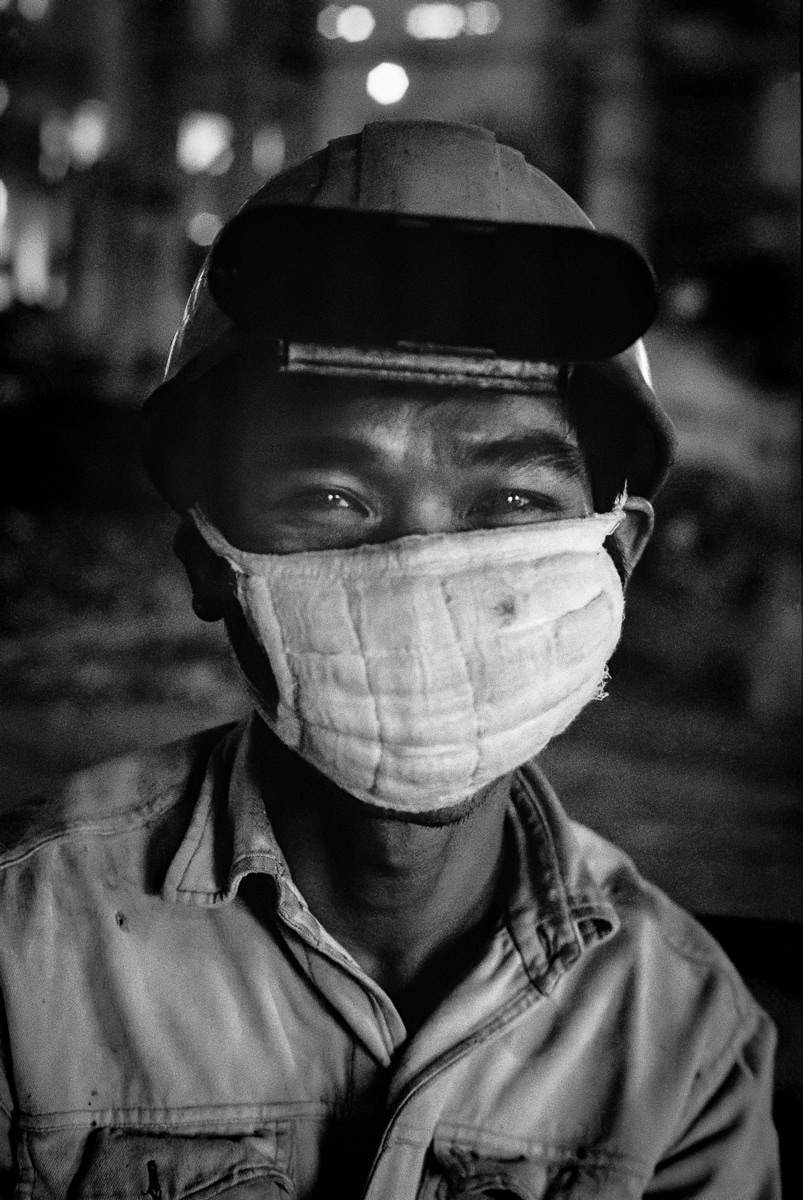
While travelling around Vietnam, I visited the key Gia Sang Steelworks in Thai Nguyen, a large factory established in 1975 that processed scrap steel. I observed workers wearing sturdy boots—though many were worn through with holes—and some wore gloves, but not all. Only a few wore goggles or safety helmets, and I was told many refused to wear this protective equipment.
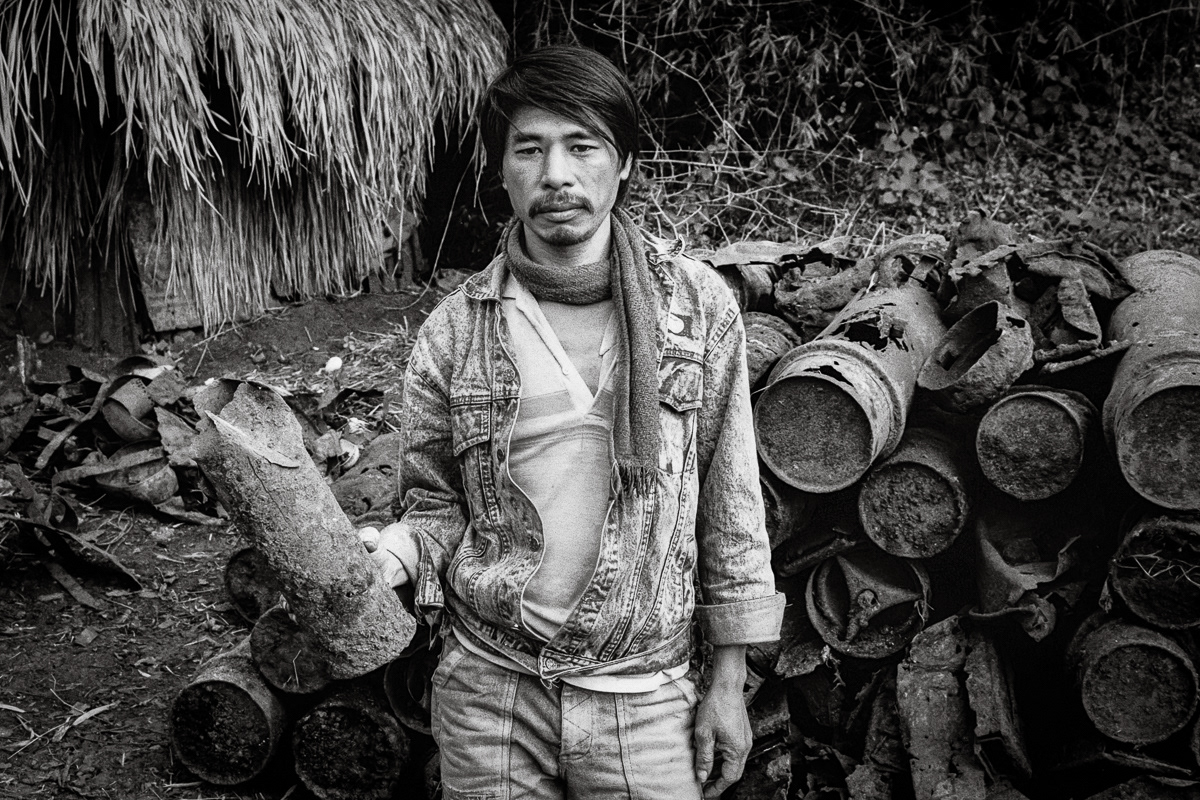
Bui Van Dan, aged 39, lived with his wife and six children in a shack just south of the former border that once divided Vietnam—one of the most heavily bombed areas during the war. He earned up to 100,000 dong for every 650 kilograms of scrap he collected. Many scrap hunters were killed or wounded by unexploded munitions detonating unexpectedly. Dan explained, “They probe the ground with long rods made from construction steel, and if they strike metal, they dig it up. I buy all scrap, whether dangerous or not. If it’s still live, I pass it on to someone who knows how to make it safe.”
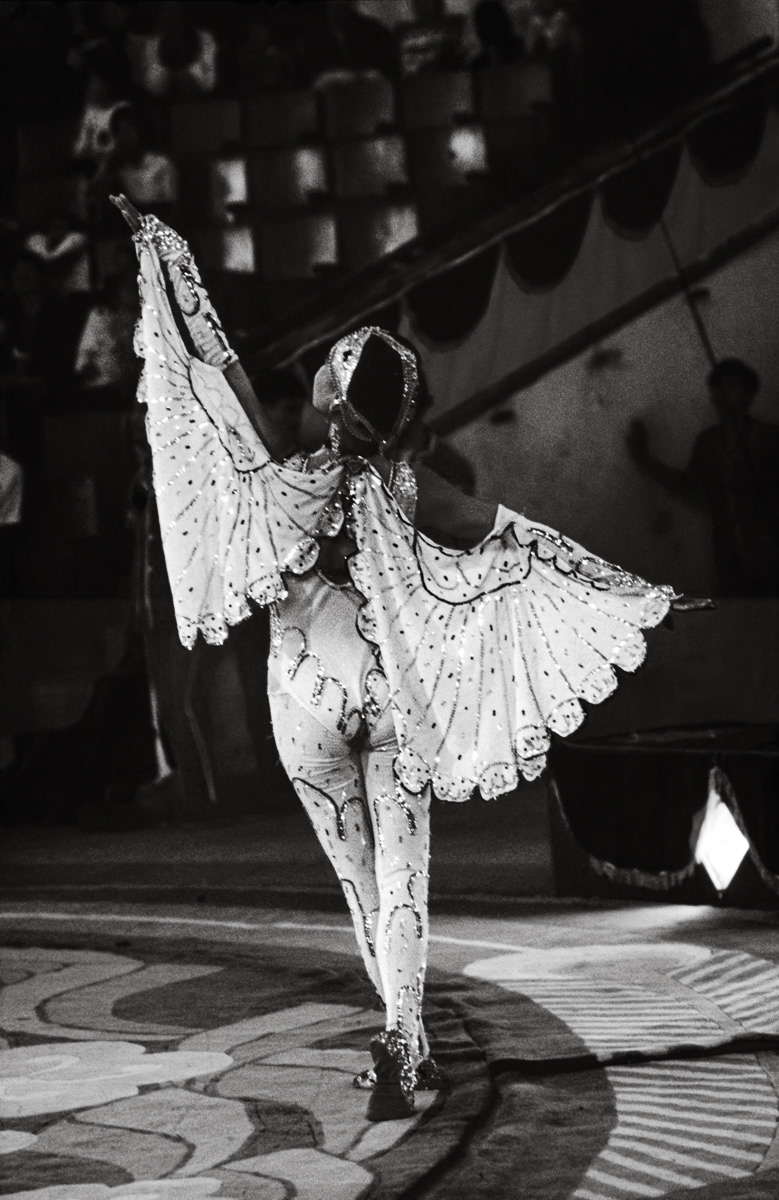
On Sunday mornings, the Hanoi circus was a popular gathering place. The ring was covered with thick carpet, surrounded by steeply rising rows of hard wooden fold-down seats. Above the entrance for performers, a raised platform held a band that played children’s songs and provided sound effects to accompany the daring acrobats and lively clowns. The audience responded with delight, fully engaged in the performance.
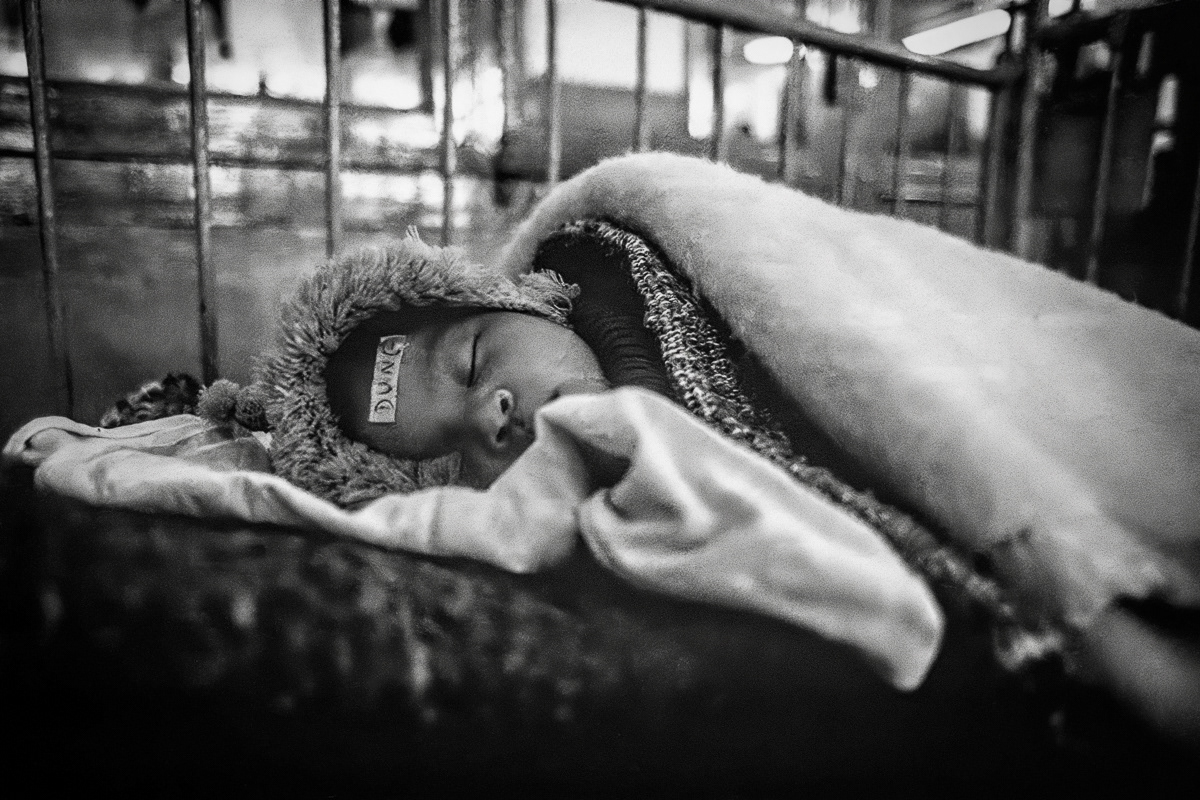
As I walked around Hue Central Hospital, I was struck by what a good hospital it was. Medical students were busy learning as they gathered around patients in their beds. But the hospital lacked many things that should be taken for granted. Equipment was scarce or old and battered. In the paediatric department, there was no air conditioning in the summer and no heating in the winter, and there were only a few incubators. The doctors and nurses had all the knowledge they needed, but little or no equipment. Baby Dung was one of the few premature babies lucky enough to have an incubator.
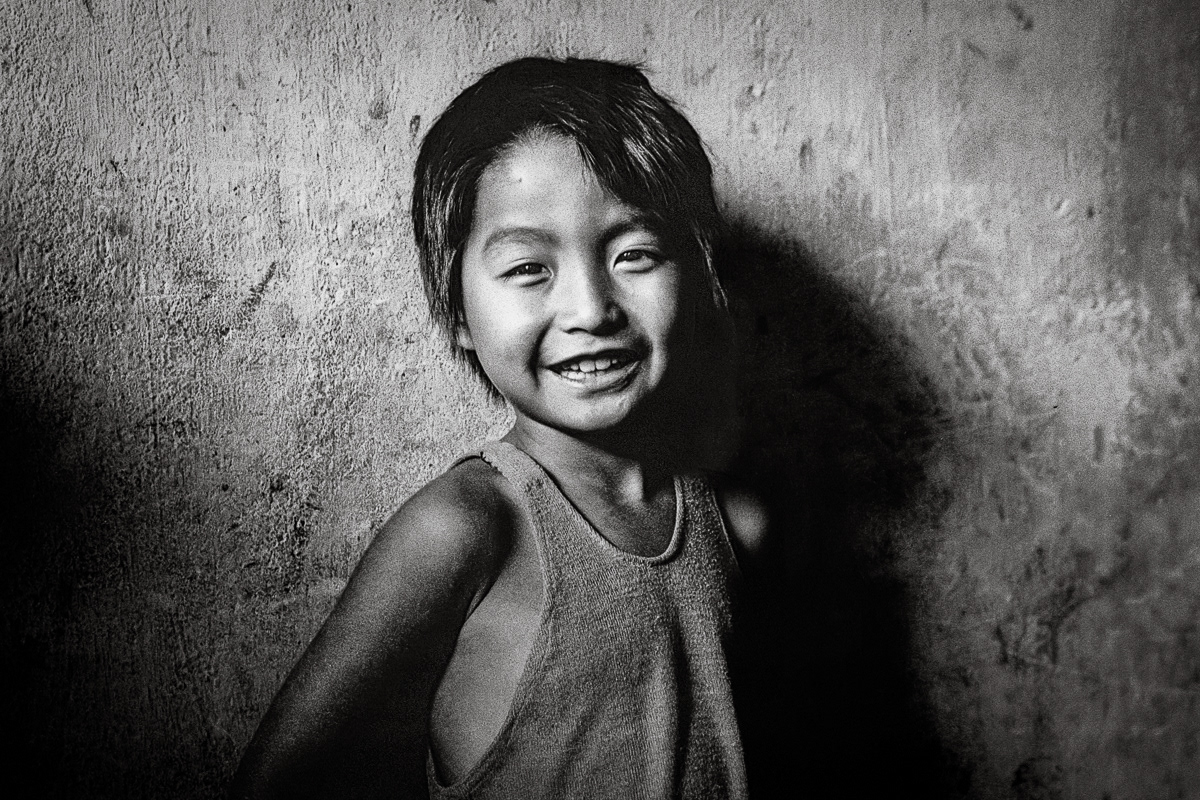
Quy Hoa Leprosy Village sits by a beautiful beach not far from Quy Nhon. Founded in 1929, it later added a hospital as a special facility for those affected by leprosy. The director, Dr Tran Huu Ngoan, was a remarkable man devoted to studying the disease and fighting its stigma. “Without love nothing is possible, but with love nothing is impossible,” he told me. In the village, families lived with support from Catholic nuns. In each family, usually only one or two people had leprosy; the others were unaffected. This boy was one of them.
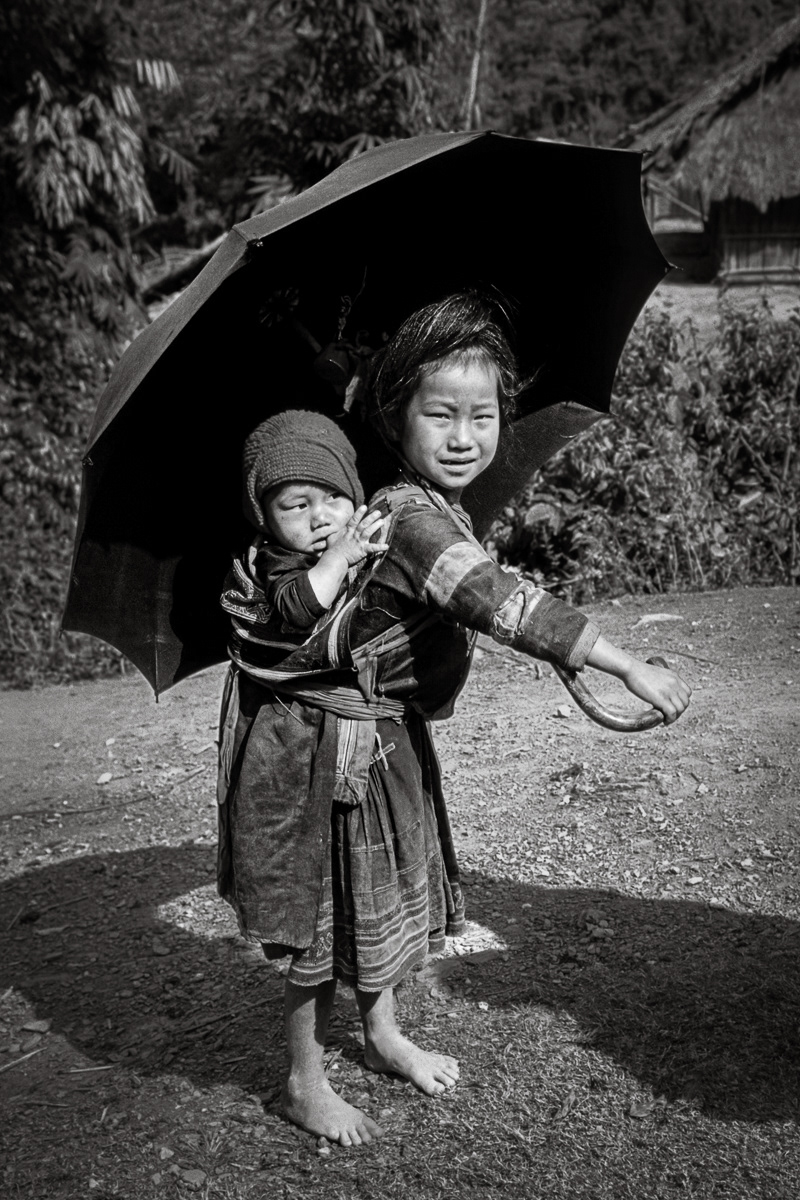
High in the mountains between Lai Chau and Dien Bien Phu, we came across a group of about 30 Red Hmong people sitting by the roadside, not far from a village. The women wore their hair in long braids wrapped around their heads as they busily plaited hair and picked out nits. At first, they were all shy, but that quickly gave way to laughter and encouragement as they urged each other to pose for photos. Among them was a little girl carrying a baby strapped to her back and holding a large black umbrella.
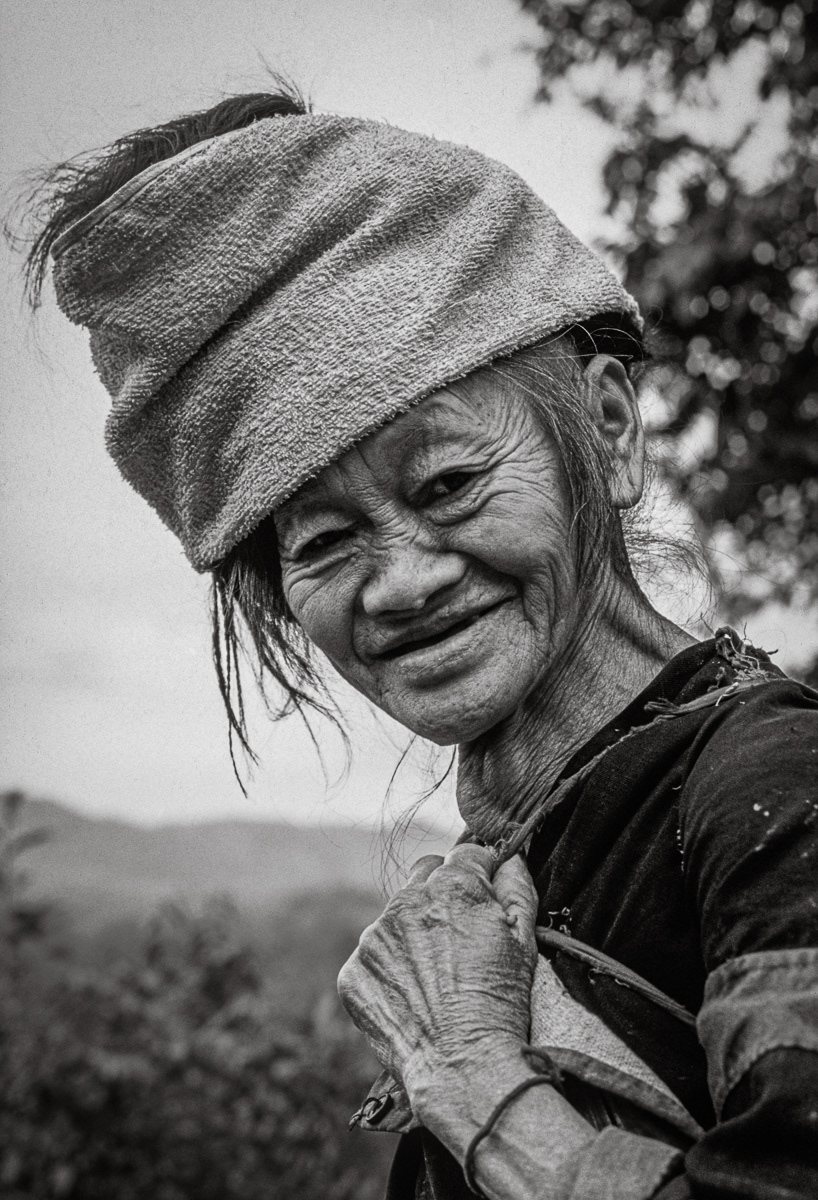
An elderly woman, who said she was probably 80 or 90 years old, was sitting as her great-grandchildren plaited her hair. She had no teeth and tried to cover her face, but her laughter made it impossible to hide. In the end, she gave up and started pulling funny faces for the camera, sharing a moment of joyful mischief.
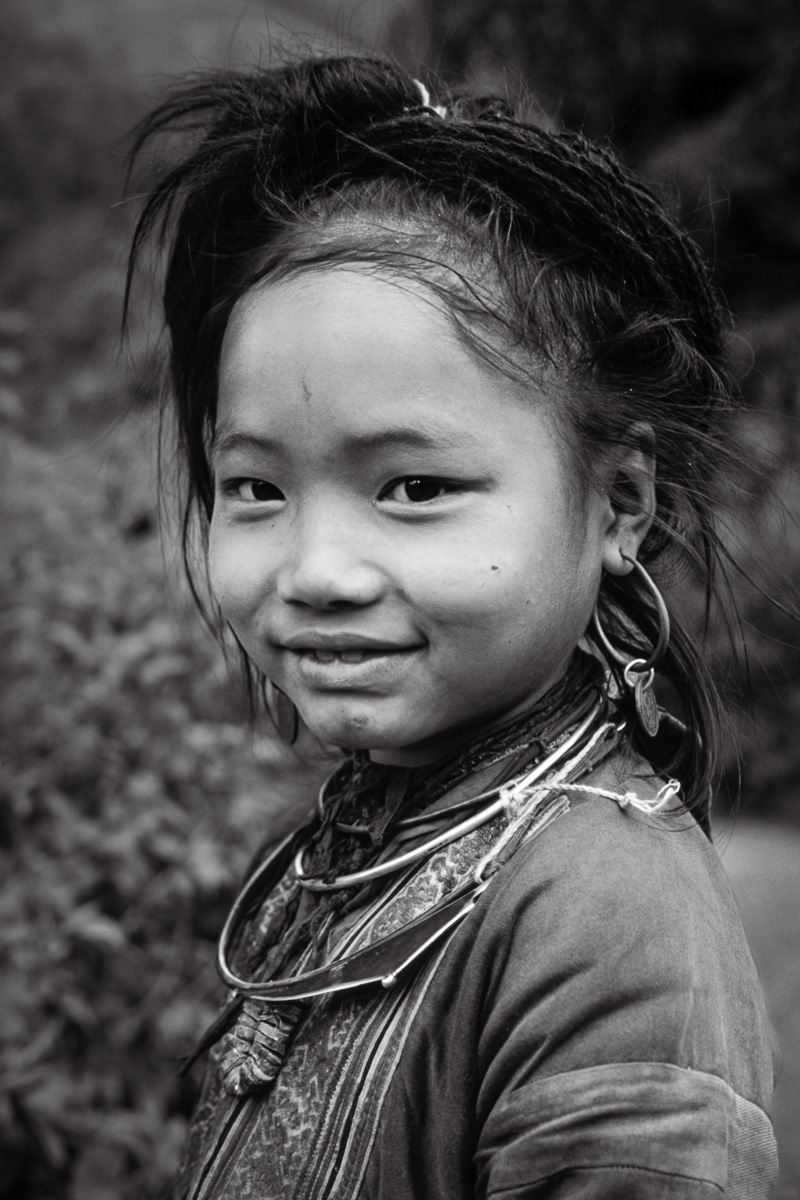
These were happy people, mostly women and children, though there were also a few men. This girl was dressed in her beautiful hand embroidered clothes, which no doubt had been passed down through the generation. A man carried a flintlock rifle, which he said he had made only a week earlier. It would be used to hunt wild boar and other animals in the forest. I was told the village consisted of 58 households, with some 300 ponies in total, and on average 3 to 4 buffalo per family.
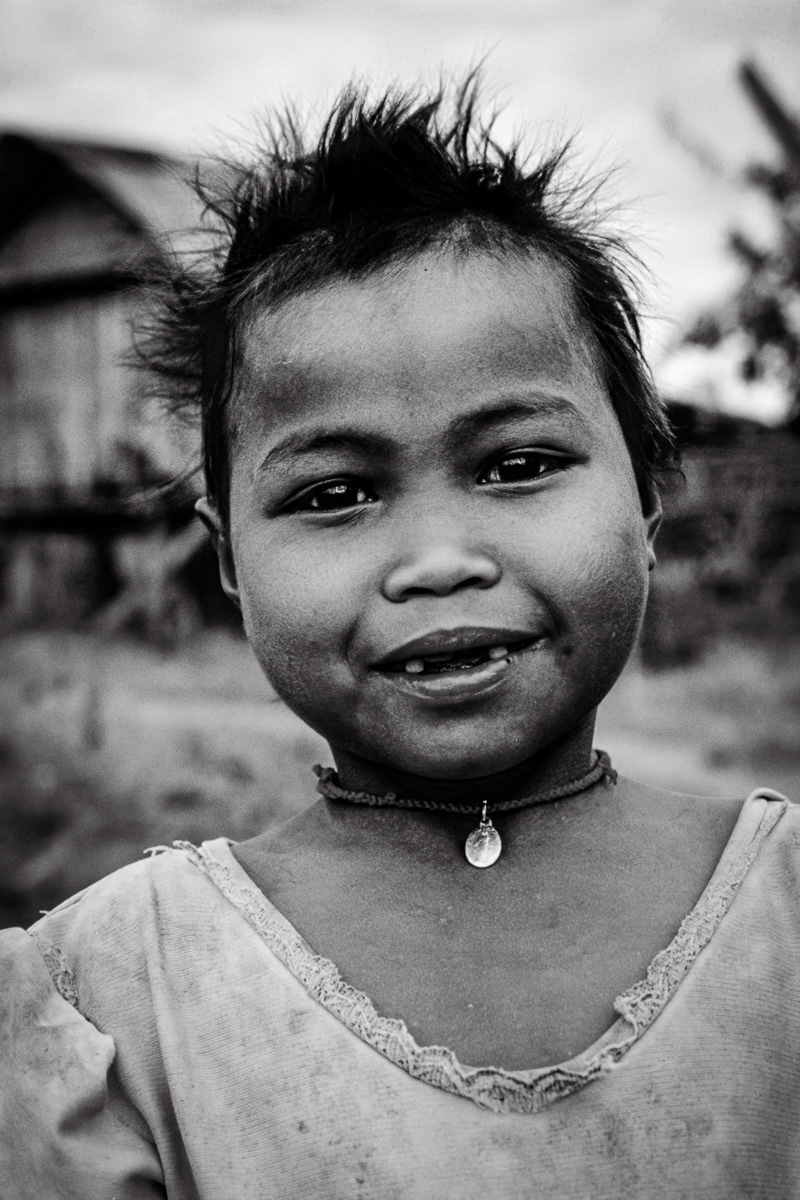
Dak Mot Sedang village, near Ngoc Hoi in Kontum, stood out for its distinctive square traditional Nha Rong, or cultural house. As I arrived, a man approached, pushing a squeaky, rusty bicycle with a sack of rice tied to the back. “Beaucoup rice, beaucoup rice,” he laughed, introducing himself as Mr Jacobe Sui. He explained that he was the designer of the Nha Rong. While we spoke, a crowd of children gathered around us, and among them was this delightful little girl.
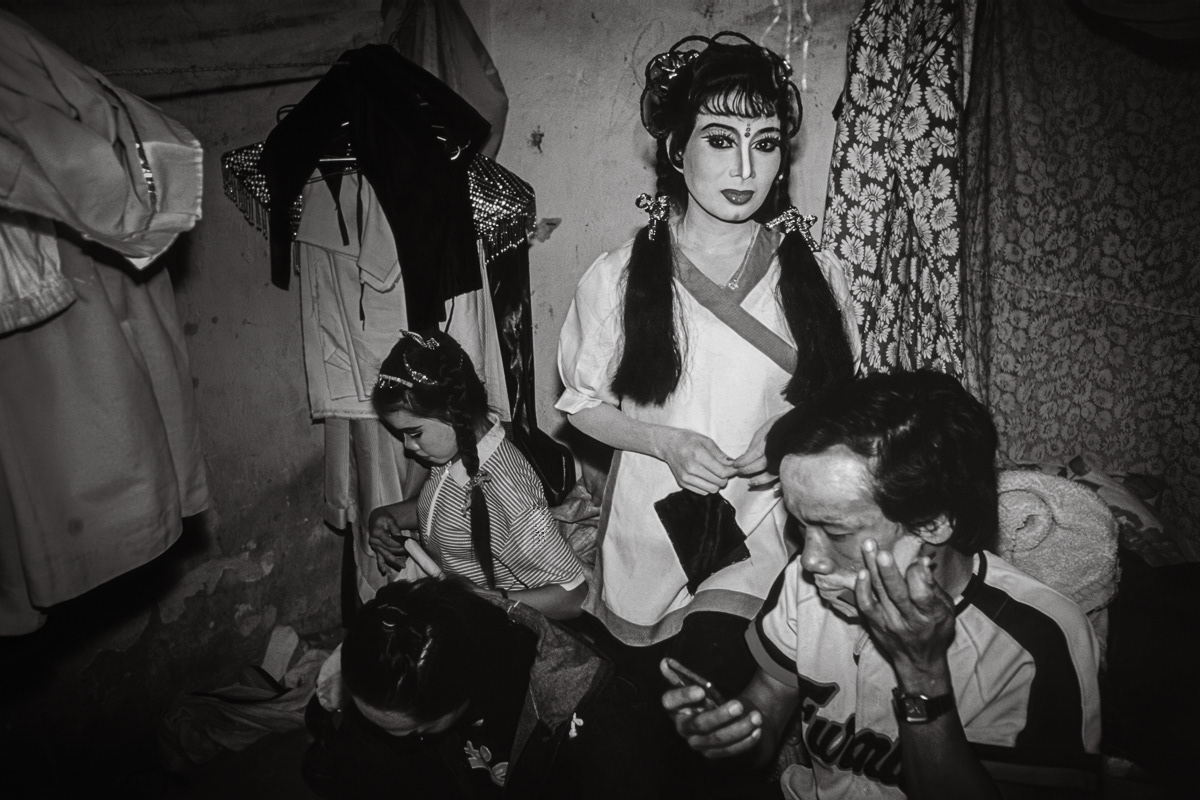
In Dien Bien Phu, the August Star theatre group performed “When the Quynh Flower Blooms,” a well-known “tuong” play blending opera, spoken drama and modern music. They were in town for four nights, presenting an open-air show that stretched three hours without a break. Le My played a lead role, her face painted white, adorned with colourful make-up around her eyes and nose, a red mark on her chin and beautifully styled hair.
The performance took place on a clear, starry night under a three-quarter moon, but it was cold—people wrapped themselves in shawls, hats and heavy clothes. It made me reflect that, with so few televisions in people’s homes, this was a glimpse of what life could be: live art deeply appreciated by all. This was truly art for the masses, and perhaps my presence in the crowd brought a smile to more than a few faces.
The performance took place on a clear, starry night under a three-quarter moon, but it was cold—people wrapped themselves in shawls, hats and heavy clothes. It made me reflect that, with so few televisions in people’s homes, this was a glimpse of what life could be: live art deeply appreciated by all. This was truly art for the masses, and perhaps my presence in the crowd brought a smile to more than a few faces.
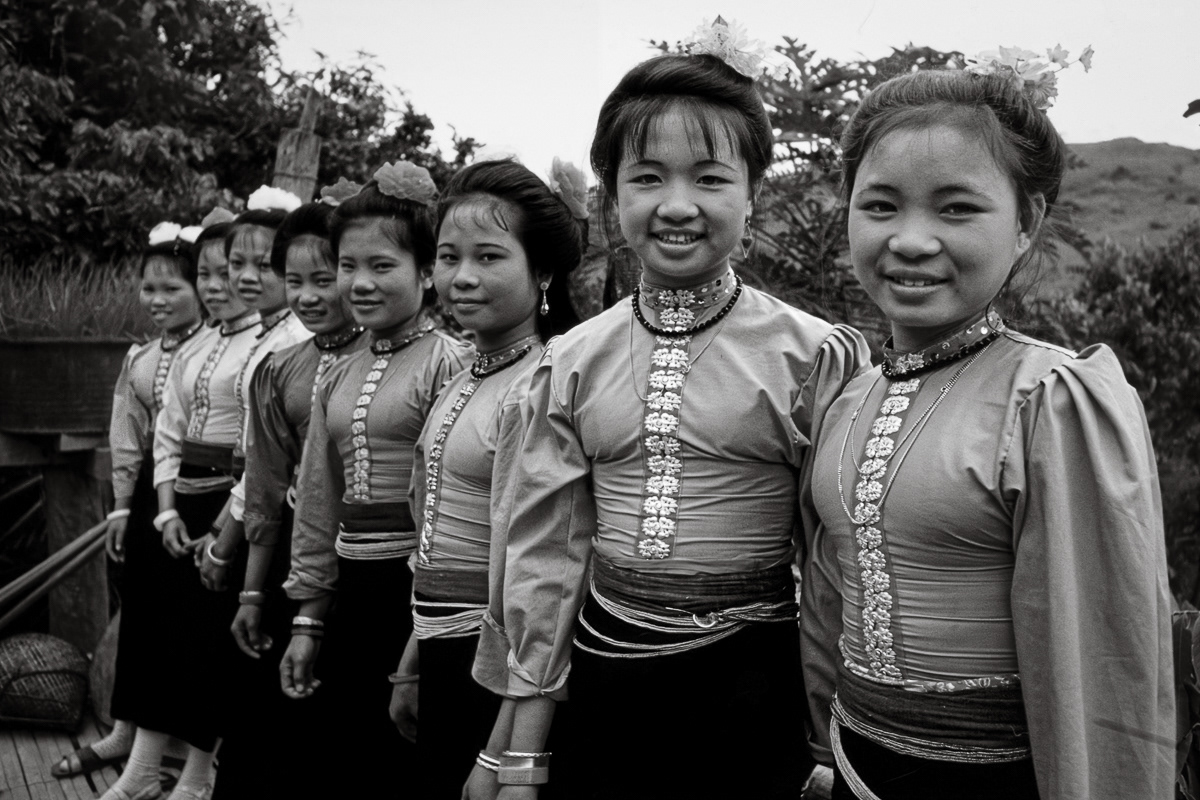
Hin village, situated 4km west of Son La city, was home to a community of Black Thai ethnic minority people. The province had earmarked it as a potential tourist destination, so local officials were eager to hear my impressions. There was to be a dance performance, followed by lunch. Music played from a cassette recorder, accompanied by musicians on a type of mandolin and the khen Thai. Eight girls faced me and began with the “Hin Village” song, moving in lines or forming a circle, holding hands and making gentle, graceful arm movements. The entire village had gathered to watch, and once the show was over I was treated to lunch with the village elders in a beautiful long house on stilts.
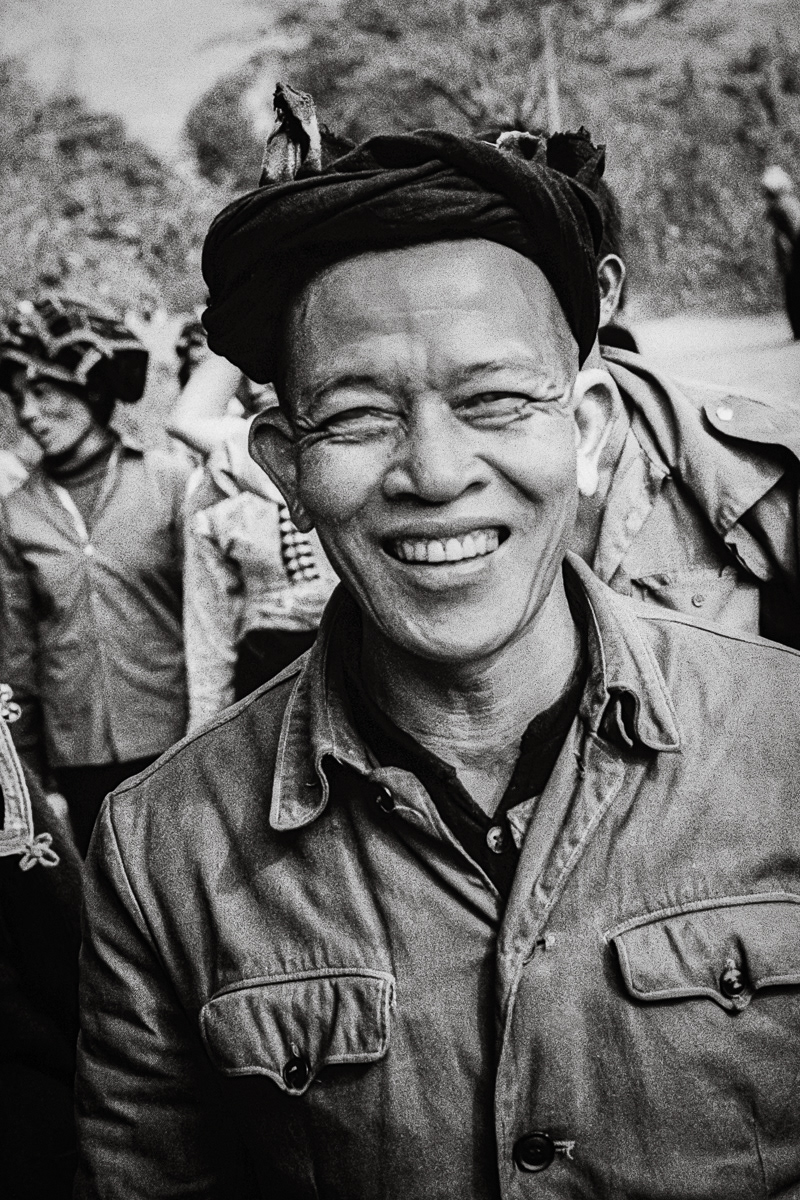
As we made our way into the mountains of Son La province, we passed numerous Black Thai villages, their stilted houses pressed against the steep slopes. Rounding a sharp bend, with a sheer cliff rising to our left, we came upon a Black Thai wedding party. Dressed in their finest costumes, they were carrying gifts of embroidered mattresses, earthenware jars, bundles of clothes, and, suspended from a bamboo pole borne by two women, a wooden chest filled with silver and other precious heirlooms. I was warmly invited to join them, and together we walked about 5 km to the bride’s village. The rest of the afternoon was a blur of drinking, eating, dancing and celebration.
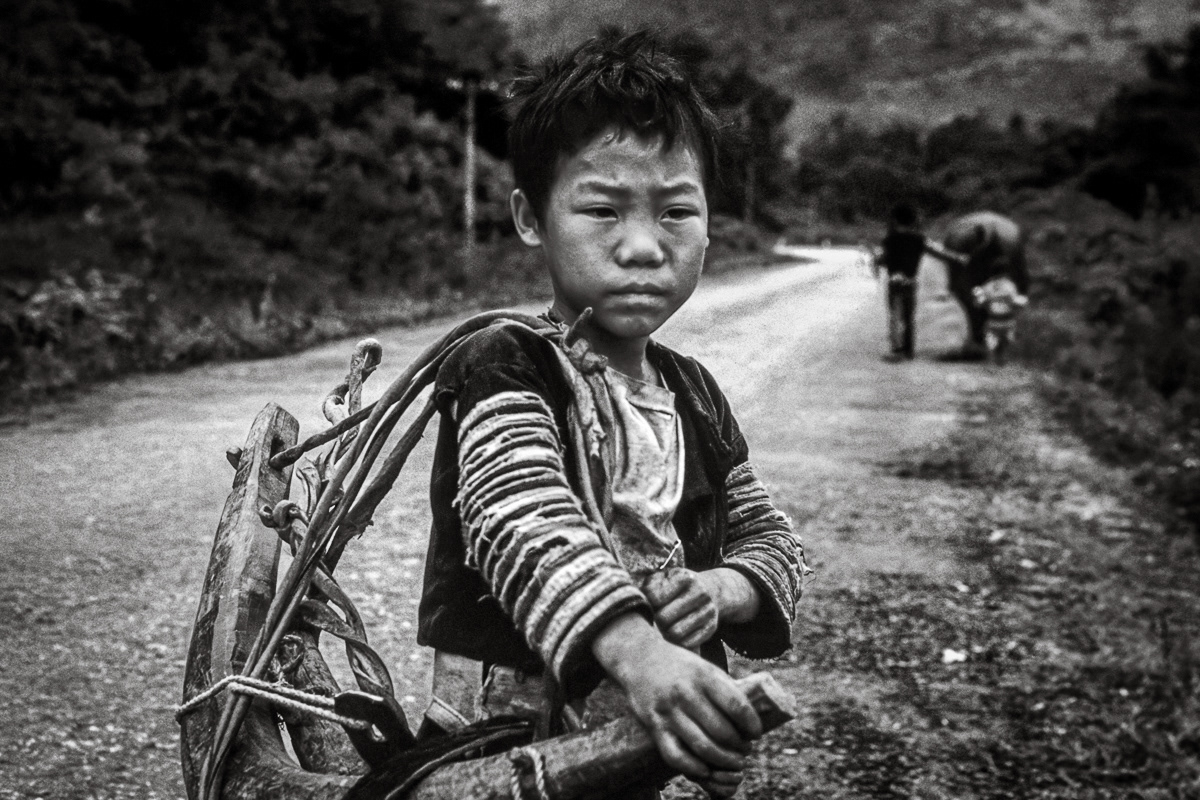
We were making our way back to Hanoi, still high in the mountains of Hoa Binh province. The roads never failed to fascinate me. People dressed in traditional ethnic minority costumes could be seen walking along the roadside. This young Hmong boy carried the heavy wooden yoke for his buffalo as they walked to plough a field after the rice harvest. His slightly older brother led the buffalo by a rope through its nose, while their younger sister walked happily by his side.
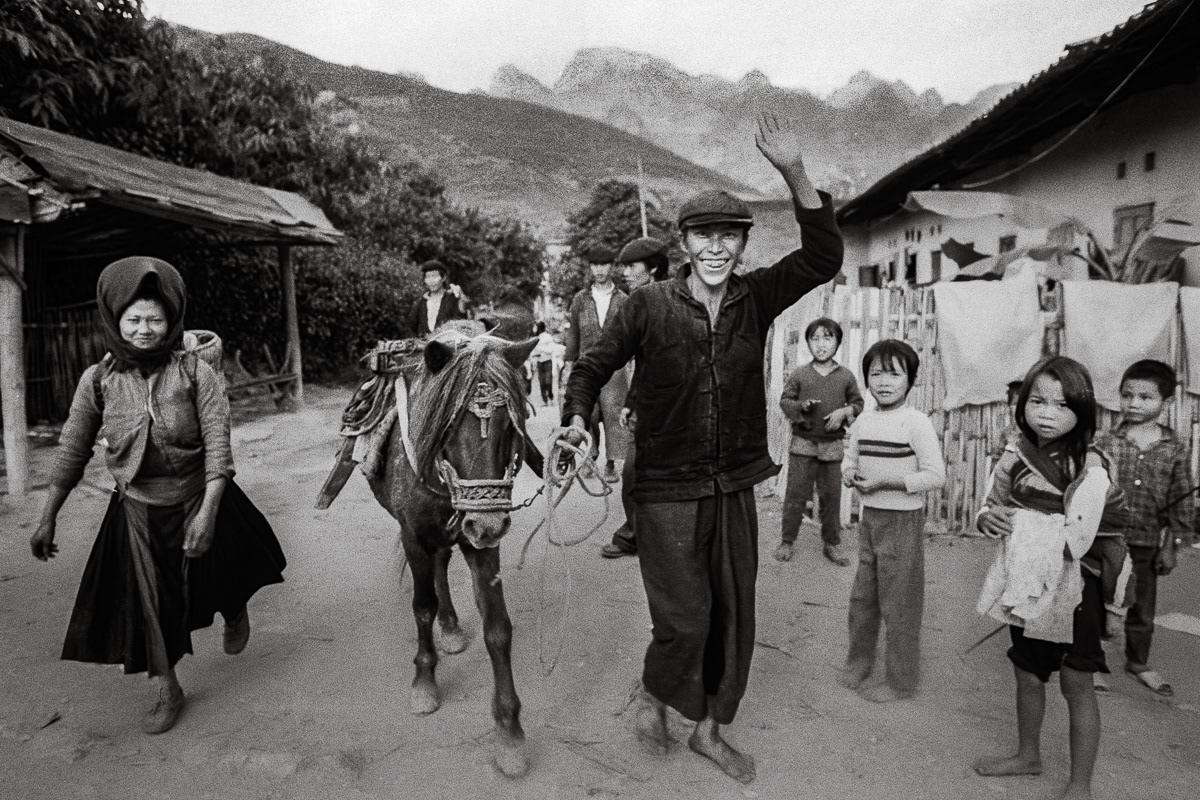
In January 1993, I travelled to Ha Giang and continued on to the northernmost district of Dong Van. Even after journeying through many of Vietnam’s highland regions, Ha Giang was truly remarkable. With every turn of the narrow, rutted roads that clung to sheer cliffs, expansive rocky mountains would appear, offering breathtaking vistas. Yet life here was hard—people often walked miles to fetch water, and the land was poor and unyielding. The population was almost entirely made up of ethnic minorities, and the weekly markets brought everyone together to trade, eat and drink. This was long before any foreign or Vietnamese tourists visited and long before the words "Ha Giang Loop" had ever been uttered. Everywhere I went, people welcomed me warmly and would always invite me to share a drink with them, which I gladly did.
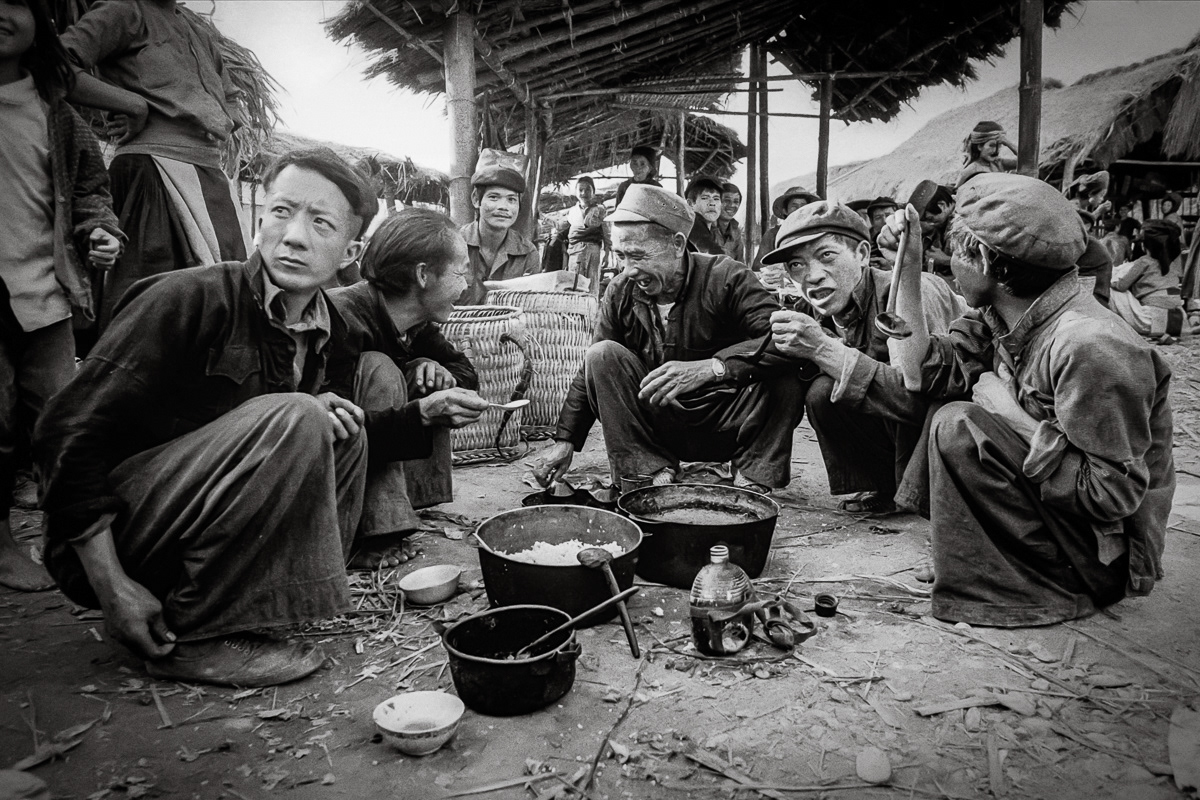
It would be true to say that Ha Giang had the most profound effect on me. The rhythm of life here had remained unchanged for generations, and because Dong Van was a sensitive border zone, it was rare for foreigners to visit. My finger was almost always on my camera shutter, as my eyes, ears and nose devoured the sights, sounds and smells all around me. I absolutely loved it.
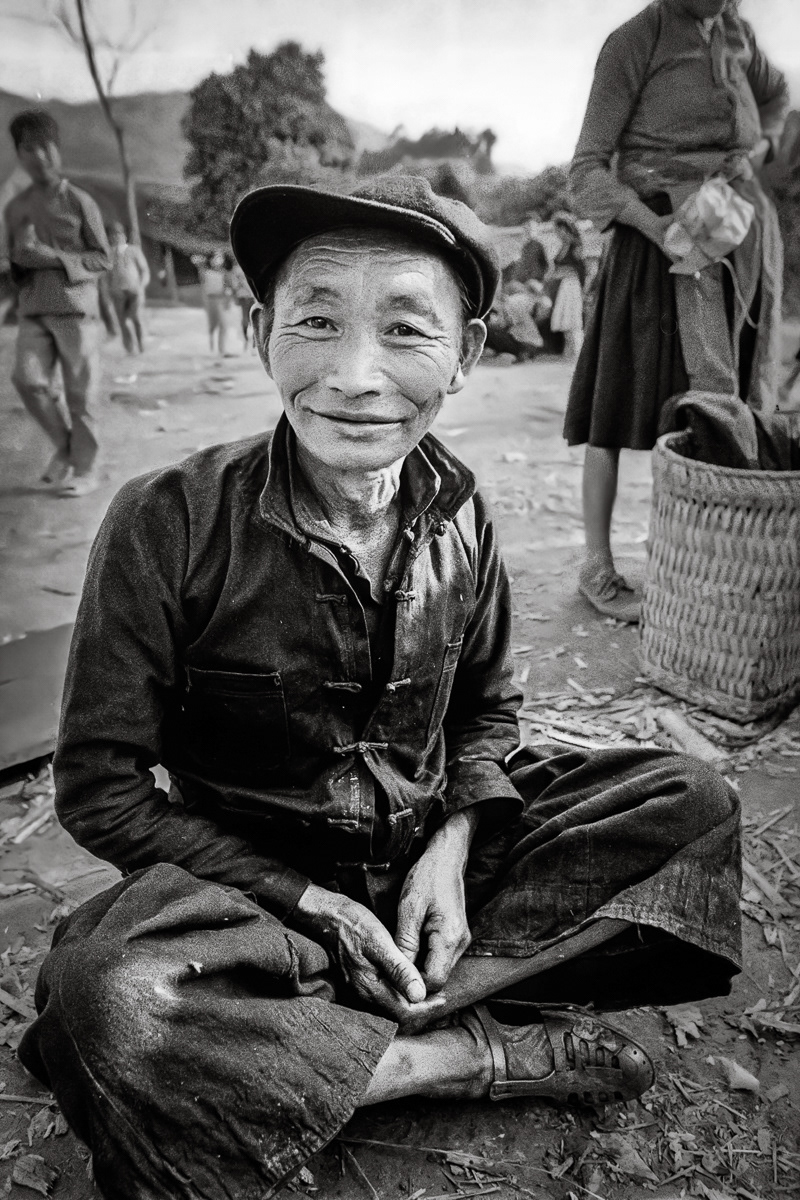
Every face tells a story, as they say. The people here lived as subsistence farmers. Due to the lack of water and flat land, rice cultivation was almost impossible, so maize was grown in the cracks between the rocks. Houses always had a fire burning, making the interiors dark and smoky. Maize was stored everywhere—on the floor and in the ceiling rafters. I visited in winter, when fresh vegetables were scarce, so our meals consisted of dried beef, sausage, peanuts, chicken and cabbage. Everything was washed down with strong rice alcohol.
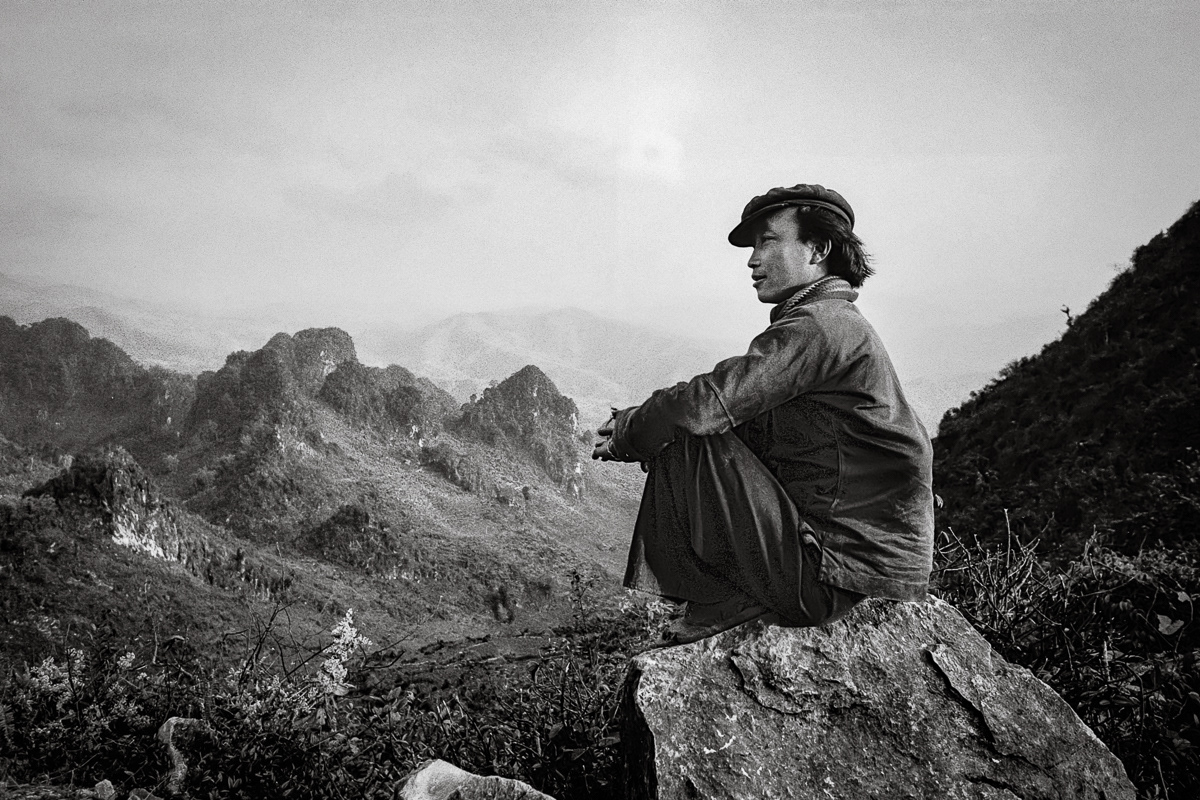
Life in Dong Van moved at a gentle pace, never hurried, guided only by the rhythms of the changing seasons. Above Quan Ba, we passed through Bac Sum Pass, known as “The Gateway to Heaven.” There, a group of Hmong had paused to take in the breathtaking view. One man sat apart from the others on a rocky outcrop, lost in thought as he gazed over the soaring mountains and the valley below. This scene captures the Hmong’s enduring bond with the land and their ancestors where agriculture, heritage and identity are intimately intertwined.
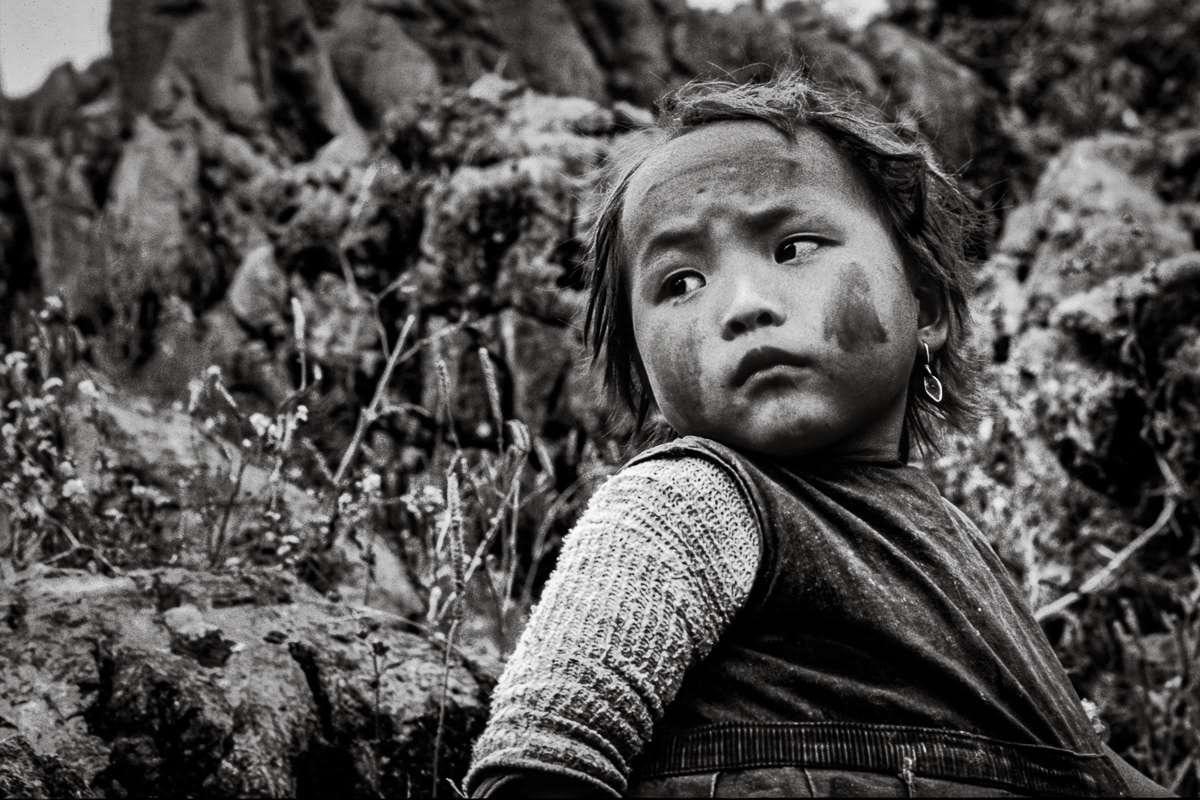
The further north we travelled, the wilder and more remote the land became. People could be seen shrouded in mist along the roads, carrying large bamboo pipes strapped to their backs as they walked many miles in search of water. Children sometimes peeked out shyly from behind rocks, watching as we rumbled past in our beaten-up old Toyota.
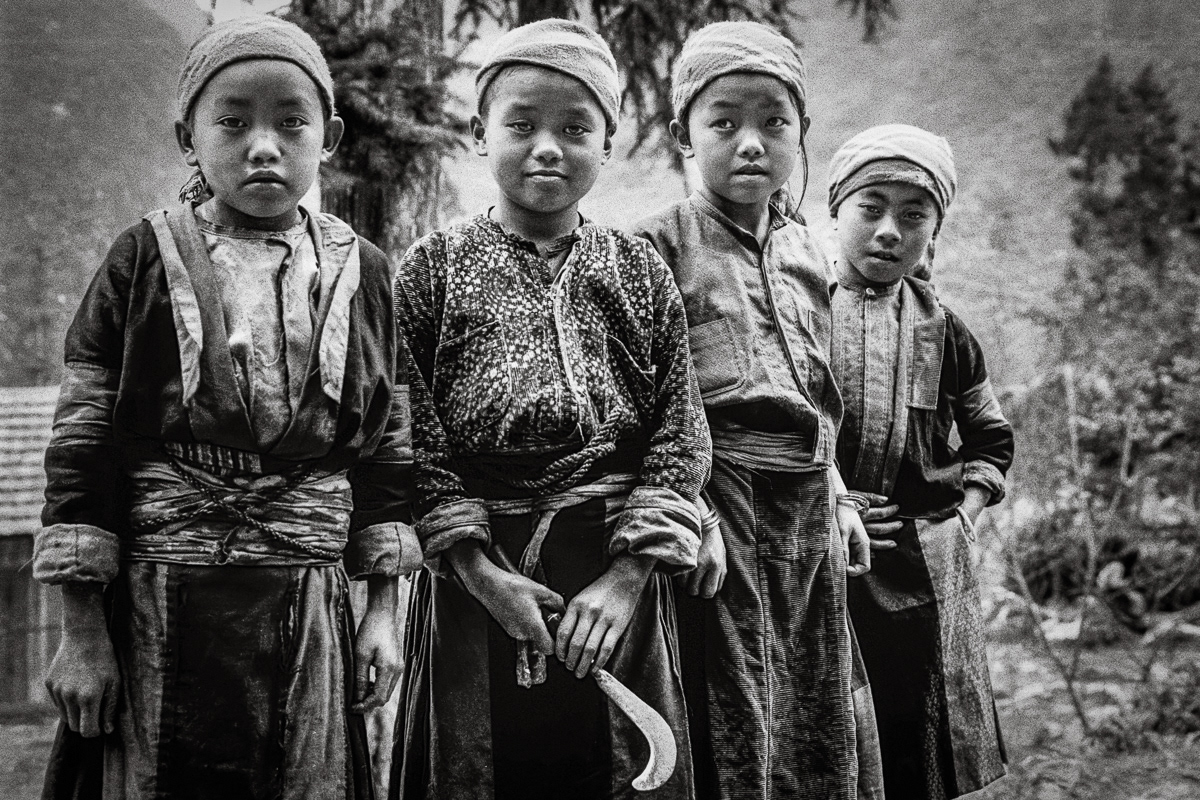
Hidden within a copse of tall cypress trees in Sa Phin was an elaborate 64-room stone and wooden palace, built at the turn of the 20th century by Vuong Chinh Duc, the powerful king of the Hmong. In 1993, it was home to a community of Hmong people living a way of life largely untouched by the modern world. Women were busy dyeing hemp fabric with indigo, their hands stained a deep purple from the dye. Others embroidered intricate patterns, while some chopped wood, cooked, or tended to daily tasks. Children practised sharpening knives nearby, immersed in the rhythms of traditional life.
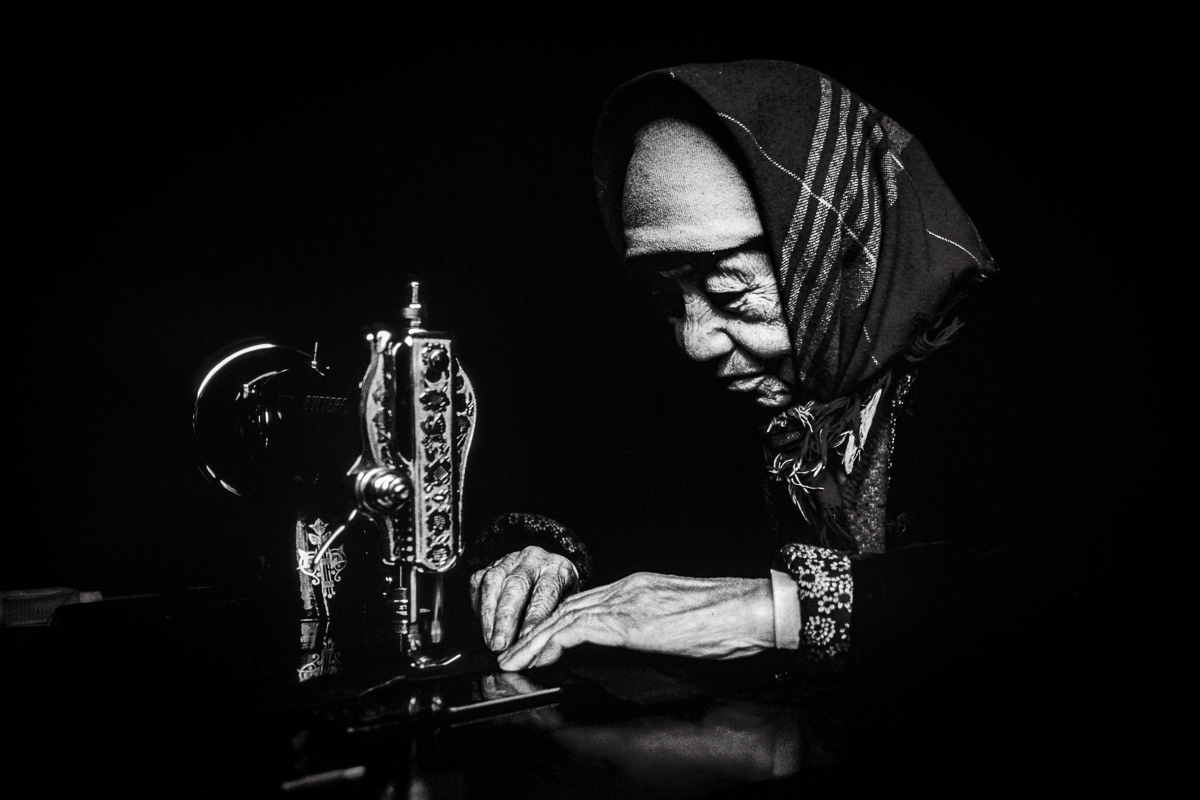
In a dark room off the rear courtyard of the Hmong King's Palace in Sa Phin, a tiny old woman dressed entirely in black except for a blue headscarf sat in the doorway. She was stooped over an ancient treadle sewing machine, carefully crafting traditional indigo Hmong men’s jackets. Her name was Vuong Tri Ngoc, and I was told she was the sister of the last Hmong king, Vuong Chi Sinh.
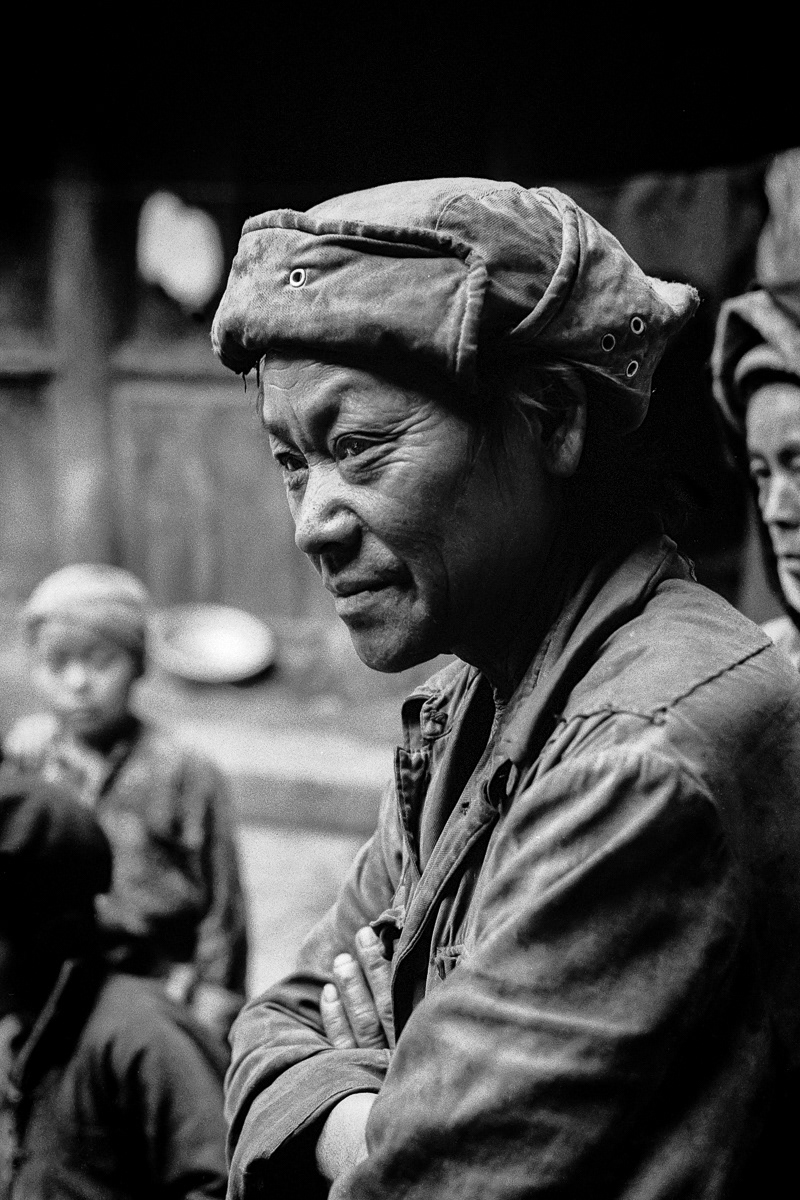
Living at the palace was a close-knit community, and I was the first foreigner to visit in many, many years. The smell of woodsmoke hung heavy in the damp winter air, while fog settled across the surrounding rocky mountains. Outside the main entrance lay the tombs of the last king of the Hmoing, Vuong Chi Sinh, and one of his wives.
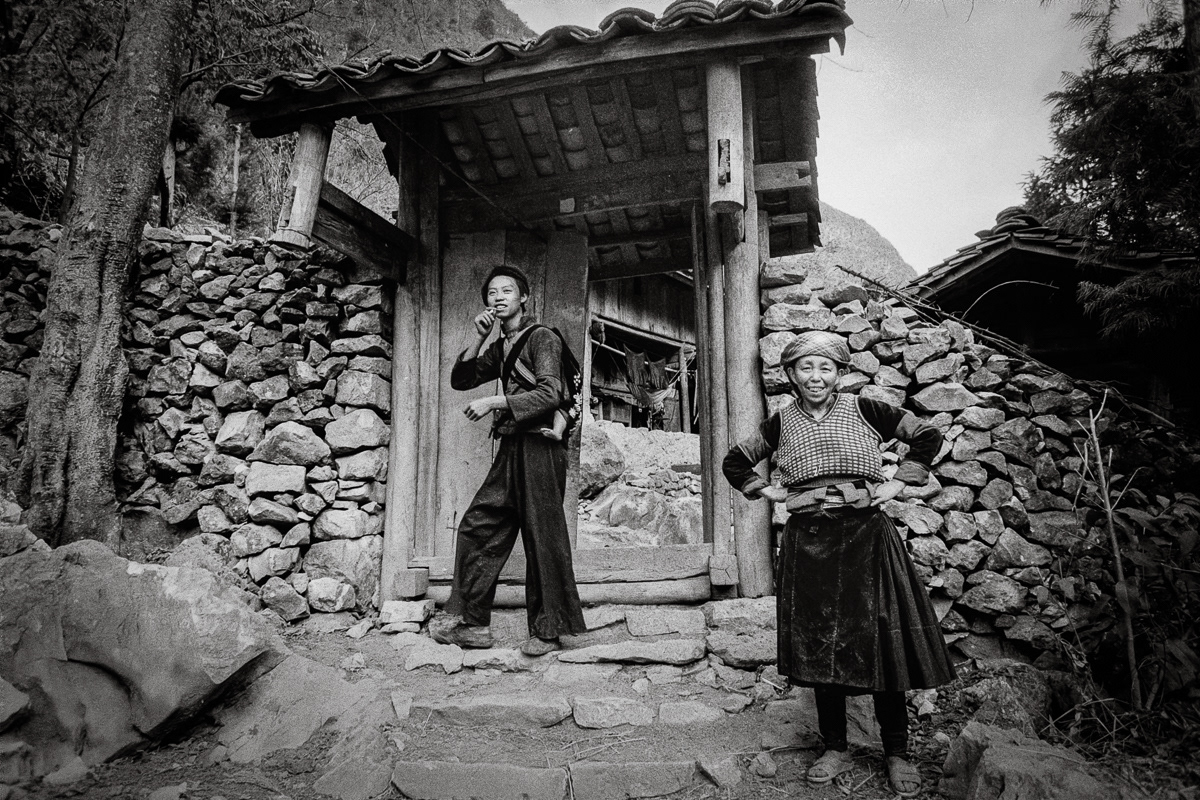
An old French fort gazed down across Dong Van town from its perch atop a nearby crag. The town itself featured a simple covered market and a few rows of old houses and buildings, many of which were crumbling. Trees were scarce, but the landscape was rich in rock. Many homes were constructed from stone, surrounded by dry-stone walls built to protect livestock.
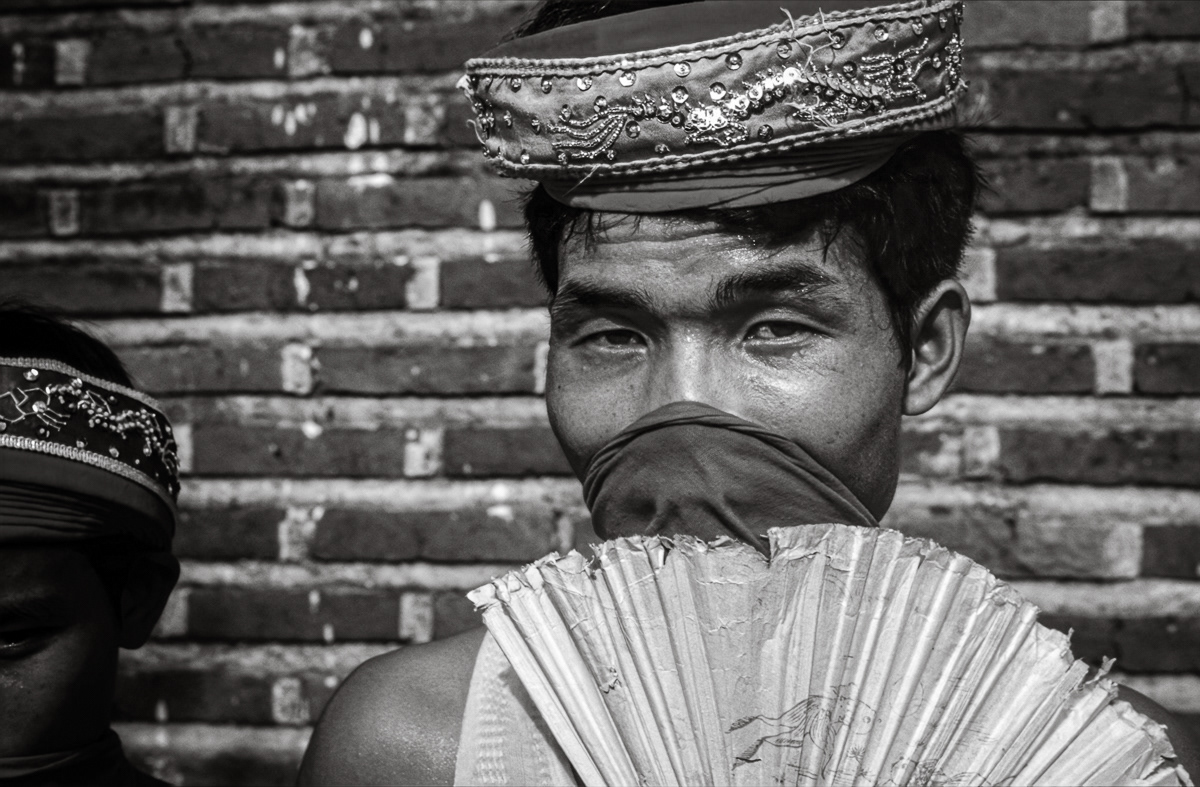
Vietnam hosts hundreds of festivals each year, many unique to the communities they belong to. Just outside Hanoi, nestled on the banks of the Red River, stands Chem Dinh, a communal house with origins dating back 2,000 years. It is dedicated to the national hero Ly Ong Trong, from the era of the Hung kings. Every year in the fifth lunar month, the festival comes alive with vibrant processions, boat races, kite flying, the releasing of birds, wrestling, traditional theatre, and the unique spectacle of living chess.
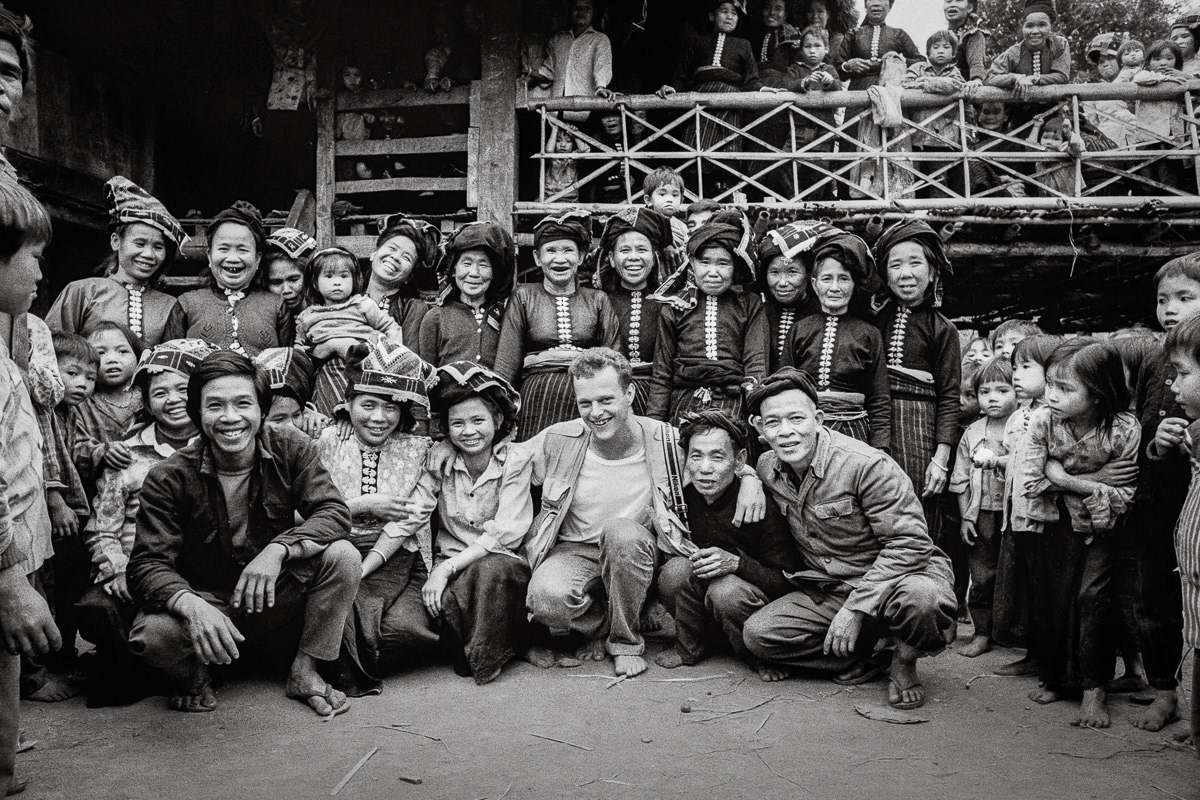
Life on the road in Vietnam was tough, and my body was battered an bruised from the rough roads and banging myself on metal struts as we crashed along. But it was the meetings on the road tat often held the greatest surprises. On 16 November 1992, high in the mountains in Son La province, Black Thai villagers bore gifts as they walked to a wedding nearby. I was invited to join them, and then proceeded to have one of the most joyful days of my life. Alcohol was plentiful, as was pork and chicken. Gongs and drums were played and people danced as they became increasingly drunk.